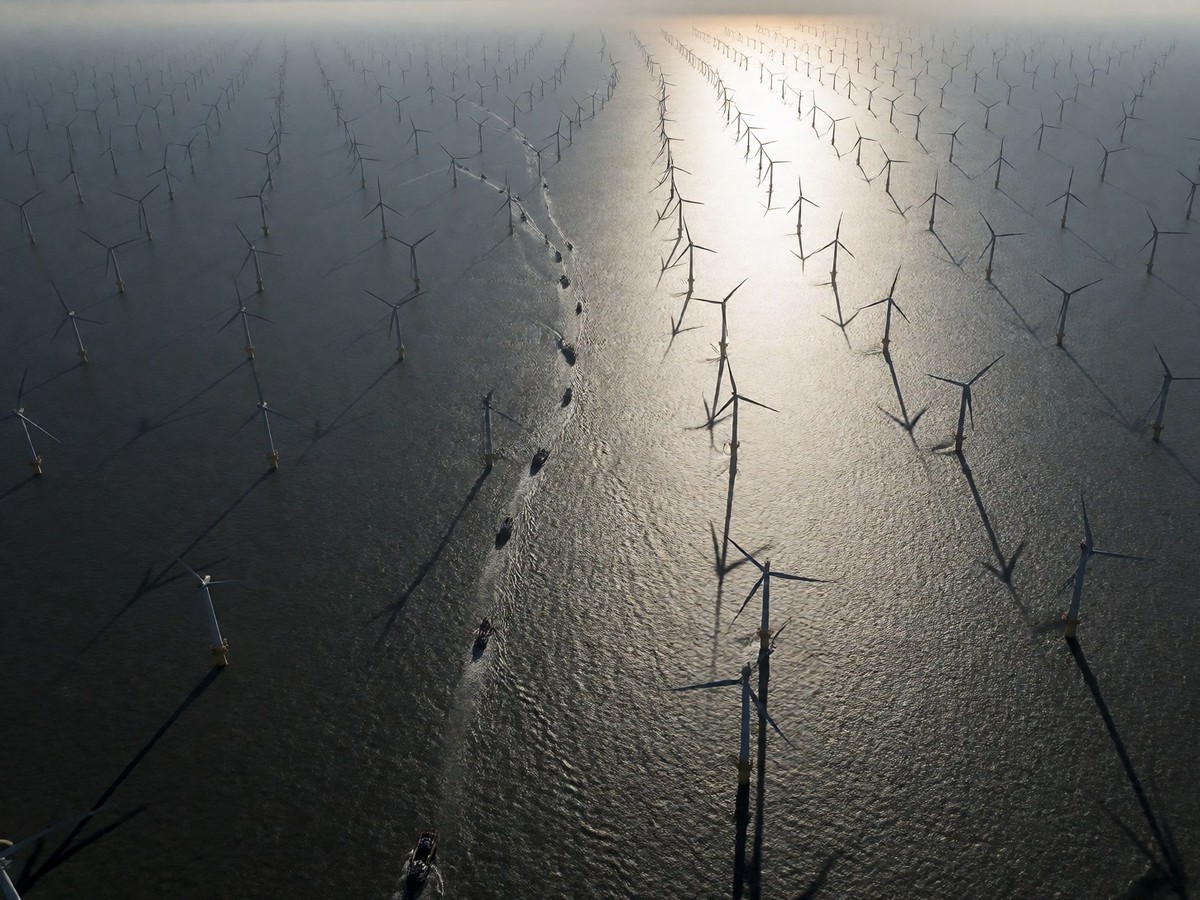
Five leaders from Germany, Belgium, the Netherlands, Luxembourg, and Denmark have written to Ursula von der Leyen and Antonio Costa. They demand deeper cooperation on clean energy before the EU-UK summit scheduled for 20 November in Brussels. The group includes German Chancellor Friedrich Merz, Dutch Prime Minister Rob Jetten, Belgian Prime Minister Bart De Wever, Luxembourgish Prime Minister Luc Frieden, and Danish Prime Minister Mette Frederiksen. Their letter calls for an agreement on a path to conclude negotiations regarding Britain’s return to the EU’s internal electricity market. This move aims to unlock the full potential of the North Sea area and transform it into the largest clean energy hub in the world.
The Financial Stakes
The UK and nine other European countries signed a pact earlier this year to accelerate offshore windfarm rollout in the 2030s and build a power grid in the North Sea. However, Britain’s exit from the EU’s internal electricity market is seen as cramping development and adding to costs. Industry body Energy UK published figures in 2024 showing that if the current relationship remains unchanged, Britain could pay extra costs of £10bn from 2024 to 29 through higher bills and lower Treasury revenues. A EU diplomat argued that the UK would be investing in access to a more integrated, secure, and competitive European energy market rather than simply paying into cohesion funds. This investment would lead to more efficient electricity trading and result in lower costs for UK consumers.
The proposal faces significant resistance because the UK would be required to contribute to the EU budget, specifically to cohesion funds promoting economic development in poorer regions. British officials are wary of a deal where taxpayers’ money could fund infrastructure projects in central and eastern Europe. Last year, negotiations on Britain’s entry into a €150bn (£125bn) EU defence fund collapsed over a dispute about the size of the UK’s contribution. To head off another row over money, North Sea member states are stressing the potential for lower and more stable energy prices for British billpayers.
Political Momentum and Limits
Prime Minister Andy Burnham has stated the government would examine options including a customs union, return to the single market, or full membership. Labour MP Stella Creasy described recent comments by Burnham as "telling the truth," noting that geography isn’t something you can fight. She added that the biggest trading bloc is on our doorstep, and we walked out of it, which means we now face a huge amount of friction to trade with them. The government announced the return of the Erasmus+ scheme in January, a clear symbol of ambition and intent according to Culture Secretary Lisa Nandy. This allows students and young people to study, train, or get work experience in the EU.
However, Michel Barnier, the EU’s former Brexit negotiator, warned that the UK cannot rejoin the single market "a la carte." He told the BBC there is no cherry picking and that the four freedoms are clearly the conditions to be inside a single market. The summit hopes to sign deals on food and drink, carbon emissions, and youth exchange, but the electricity market integration remains the most contentious issue.