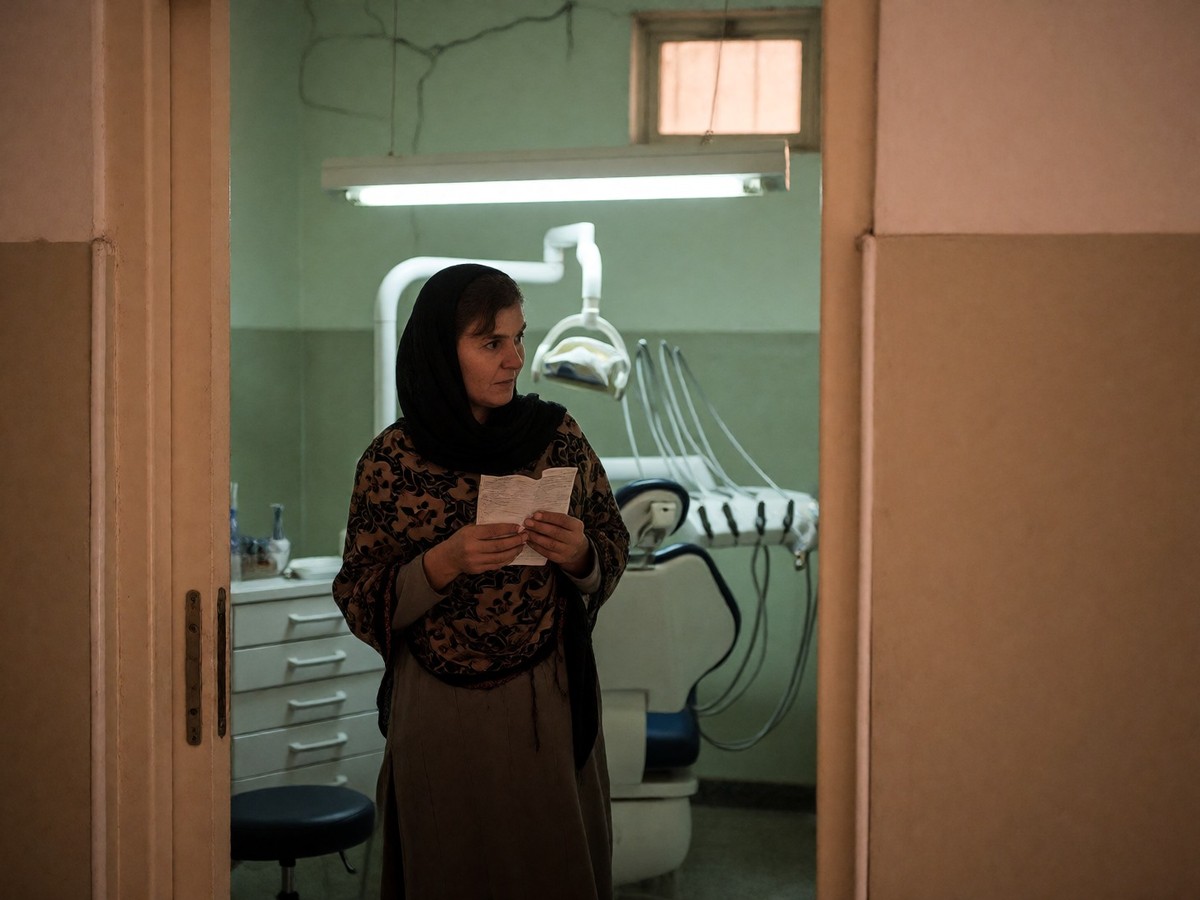
Farida, 37, arrived at a dental clinic in Herat in early July with severe tooth decay. The dentist prescribed implants and dentures, requiring her to pay the full cost upfront. During the third session, staff told her: "We cannot treat you right now. Go home, and we will call you ourselves because a problem has come up." Two days later, she learned that an order from the Ministry for the Propagation of Virtue and the Prevention of Vice prohibited male dentists from treating female patients. Three months on, her treatment remains unfinished. While no public restriction exists, media reports and interviews indicate a de facto ban has spread across the country. Security forces enforce this rule through raids and threats of imprisonment for practitioners found with female patients.
Restrictions on examination and naming
In most provinces, male doctors receive directives forbidding them from examining or providing emergency care to women unless specific conditions are met. These exceptions include the presence of a male guardian, known as a mahram, or having procedures performed by female nurses. Samim, a surgeon who has worked for 15 years in a northern public hospital, states: "We are not allowed to directly examine female patients because we are not their mahram. It makes no difference how simple the procedure is or how critical the patient’s condition may be." In Balkh province, officials banned calling female patients by their actual names in May. Hospitals and clinics must use the word "Bibi" instead, even on medical prescriptions. Rahima, from Kunar, reported that an elderly relative traveled hundreds of miles to Kandahar for dental work. Her husband refused to let her see local male doctors, citing shame. Since December 2024, women have lost the right to study at medical institutes, and hospitals confirm the Taliban banned hiring female staff. Remaining female doctors must also have a mahram present. One patient waited to see a male doctor despite arriving with her father because the clinic required another female patient with her own mahram to arrive first. This ensures someone can help if a problem arises, as the doctor is forbidden from touching a female patient.
Contradictions and coping mechanisms
Talban declarations claim doctors treating female patients are exempt from prohibitions. In February, communications minister Hamdullah Nomani said male doctors would be considered mahram when treating women. Testimonies gathered by the Guardian and Zan Times run counter to these statements. Nargis, an assistant at a dental clinic in Jalalabad, says some doctors keep lookouts outside to warn of approaching officials. One male doctor joked about keeping a "chadari" inside the office so he could put it on if inspectors arrived, preventing them from recognizing him as male. Patients face a stark choice between risking themselves and doctors, using unqualified female providers, or living with their ailments. A patient in a city with no female doctors asked: "How can they impose so many restrictions? Human life has no importance to them at all." The ban creates absurd barriers where basic medical access depends on complex social arrangements rather than clinical need.