Germany expects significant disruption
Germany expects significant disruption this Saturday as the Gen Z regelt alliance calls for supporters to turn out in more than 30 cities. The group demands more spending on schools and climate protection, plus more money for housing, and also opposes plans to return to mandatory military service. More than 160,000 people registered on the movement’s website by Friday to participate in the demonstrations. I find the federal pupils’ conference decision to distance itself from the Saturday events logical because the initiative’s "unclear" organizational structure makes the demonstrations unpredictable. Approximately 10,000 protesters, primarily pupils, students, and their parents, expect to gather at the Brandenburg Gate on Saturday afternoon. Another smaller gathering remains planned for the Mitte district in the early evening. Berlin police chief Barbara Slowik Meisel will deploy 1,500 additional officers to the capital, though she said she has little reason to fear that people or property will come under attack. She stated that authorities have no concrete evidence of any coordinated looting operations being planned. Alexander Throm, of the ruling conservative Christian Democratic Union parliamentary group, wrote that scenes like those in France must be prevented at all costs. Felix Banaszak, the co-leader of the opposition Green party, told the RND media group that rhetoric seeking to criminalise these protests pre-emptively and paint them as the work of marauding gangs may even drive people towards radicalisation. The federal pupils’ conference instead plans a separate protest in Berlin on 20 November to address the decline in German school performance.
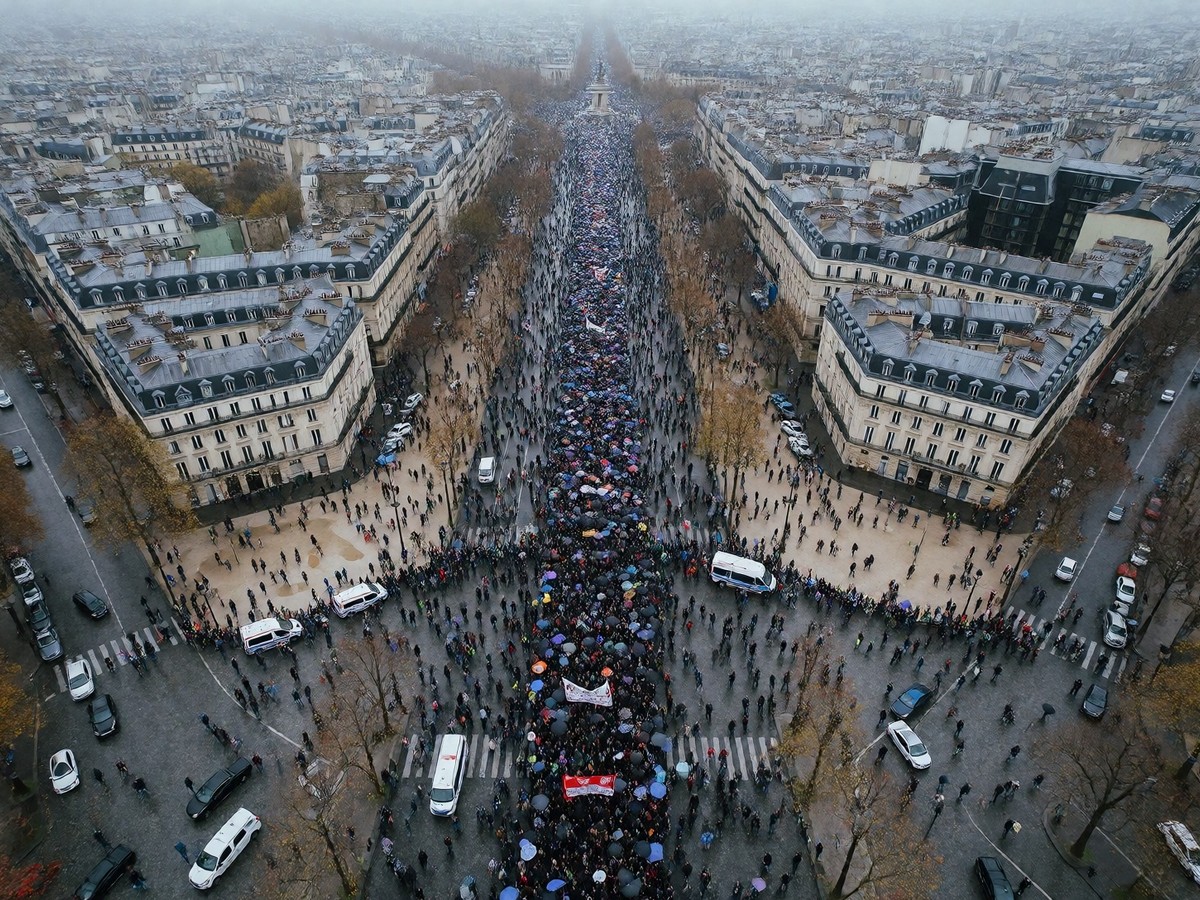
France faces security risks and banned marches
France prepares for a day of high risk this Saturday as 70,000 police and gendarmes deploy to quell potential violence. Interior minister Laurent Nunez reported that radical groups have used social media to call for violent Halloween gatherings. He added that the biggest threat to public order will probably come after mainstream cost-of-living demonstrations officially end. I view the decision to ban two separate marches through the Paris city center as a pragmatic move to avoid a repeat of the looting that swept French cities during the first wave of mass protest on 17 October. The banned marches involve unions and the gilets jaunes movement, both of which are challenging the decision to exclude them from the center. Police instead authorized a single march in the far south-east. Last Saturday, 410,000 people marched across the country. This unrest follows weeks of student demonstrations in Italy, Spain, Portugal, and Albania. Students argue that government measures, such as providing loans to local authorities for school renovations, do not go far enough. A nationwide strike is scheduled for 5 November to support the demands of various unions and student groups.