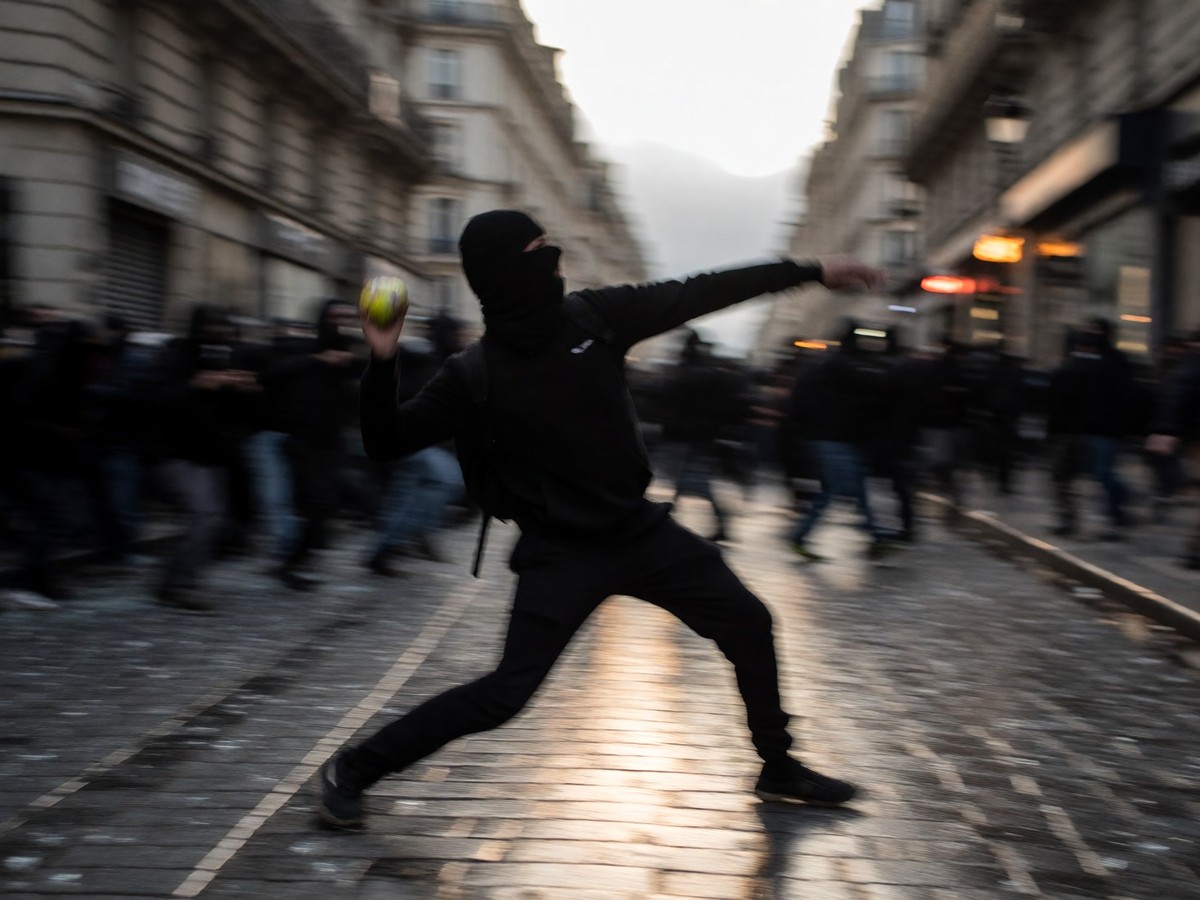
Economic and physical costs
Demonstrations reached a sixth consecutive weekend on Saturday, November 21, as citizens reacted to high prices, failing public services, and alleged police brutality. The French insurance federation estimates that damage to shops and private property from protests since October 17 totals approximately 207 million euros, while more than 1,000 police officers suffered serious injuries during these recent demonstrations.
| Protest Impact Metric | Reported Figure |
|---|---|
| Property damage since October 17 | 207 million euros |
| Police officers injured | Over 1,000 |
| Estimated far-left activists | 5,000 |
Student protests grew into street looting and violence. Demonstrators faced police stun grenades and batons during clashes that left some young protesters with broken bones and two individuals losing their hands. President Emmanuel Macron blamed delinquents and far-left groups for these riots, claiming their goal is to overthrow the French Republic. The unrest resembles a political football match ahead of next year’s presidential and parliamentary elections. The left blames the center and the right for the cost of living crisis, while the nationalist right promises to return order to the streets.
Tactics of the Black Bloc
The Black Bloc uses black clothing and ski masks to hide identities from police during the evening hours. Seventeen-year-old Starfliks, a member of this movement, carries egg shells filled with paint in his backpack to throw at police helmet visors. He uses Signal and Telegram to coordinate meetings with other protesters. He says these paint bombs force police to lift their visors so they inhale their own tear gas. This teenager does not fear arrest as much as he fears a society that refuses to change. His parents agree with his political views but do not support all participants in the riots.
Eighteen-year-old Nasa and his friends joined the protests because they come from areas with failing schools and teachers who resign. They insist they are not organized by the radical left. They use advice from Instagram to leave phones at home and imitate Bruce Lee by being "like water" in the crowd. Some protesters wave flags with red anarchist symbols and Antifa logos. An experienced Black Bloc activist argues that the state manipulates the public by claiming these groups are organized when they simply act out of shared anger. He says the unifying factor is anger, which also appears in protests in Italy, Germany, and Spain. He also says that Melenchon and the LFI party attempt to calm protests, whereas he believes things must be intensified.
Political implications
The unrest occurs as France prepares for presidential and parliamentary elections next year. Current polls predict a second round between nationalist Marine Le Pen and anticapitalist Jean-Luc Melenchon. Melenchon, who attends most protests, denies any connection to the violence. Michel Klein, a retired police commissioner, believes the radical left lacks the means to destroy the Republic despite their stated intentions. Nationalist groups have begun appearing on the outskirts of cities to protect French streets.
In the countryside near Limoges, a 39-year-old activist spoke about the necessity of action after a fire damaged the 19th-century City Hall in October. His 34-year-old son is currently in police custody and is suspected of starting that fire. The father, a local activist for two decades, said he would accept a bullet to protect the youth of the country. He mentioned the use of military vehicles and brutal force against students. This tension between the far-left and the nationalist right may escalate before the elections.