Polish judicial crisis
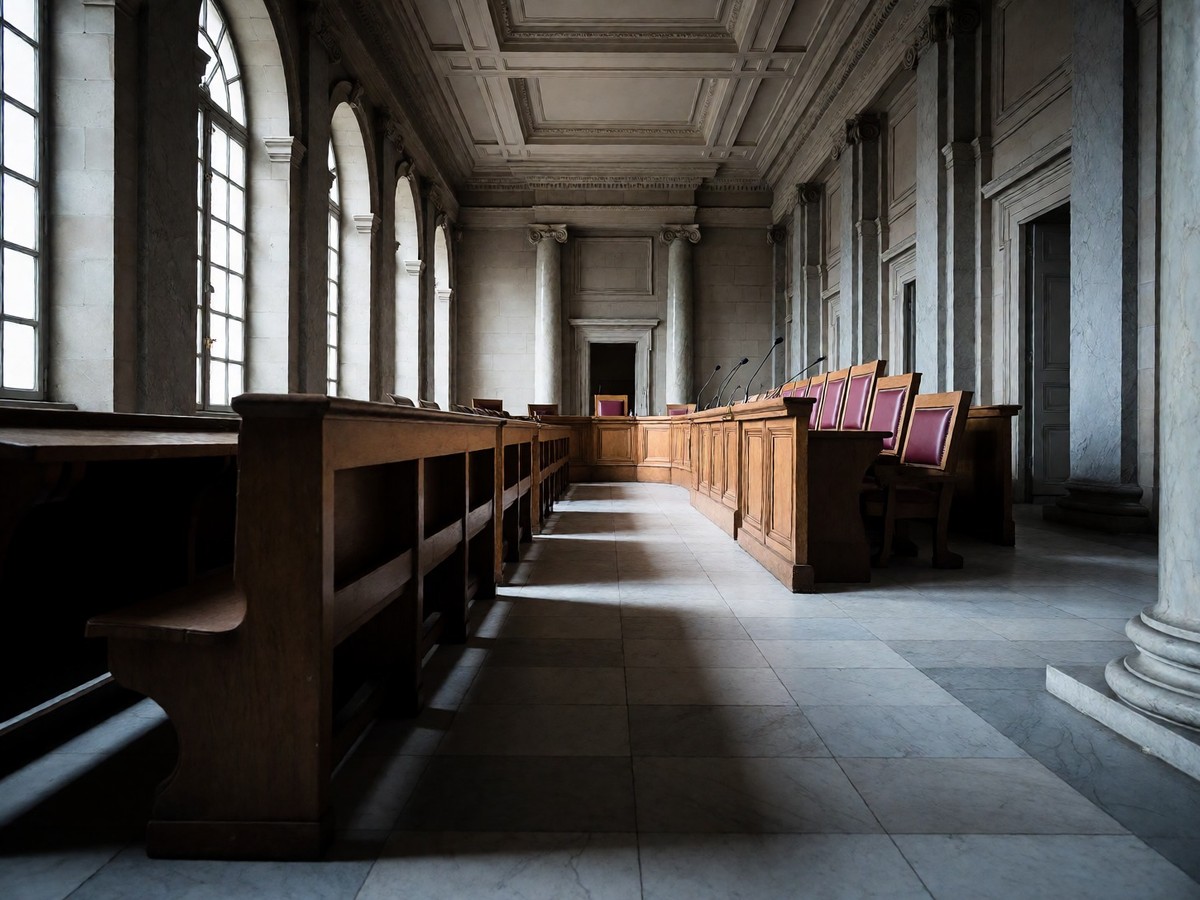
Government-backed judges attempted to seize procedural control of Poland’s constitutional court on Friday, suspending the PiS-appointed chief judge and deputy, an action that prompted overnight street protests and forced the deployment of riot police to protect the tribunal building. Prime Minister Donald Tusk defended the move during a Saturday night television address, stating that "in certain matters, there can be no compromise." Tusk argued the shake-up remains necessary to restore a court that remained paralyzed for more than a decade during the eight-year rule of the Law and Justice party, telling viewers the court in the form imposed by PiS was not a "genuine court," noting that European tribunals issued adverse rulings against it. Tusk compared the opposition’s reaction to "a thief snatching an elderly woman’s handbag, running off, and when he is caught, he screams that he is subjected to violence." He also noted that Russia’s former president Dmitry Medvedev joined the opposition in accusing Warsaw of a "constitutional coup," which Tusk suggested made the opposition’s motives clear. President Karol Nawrocki, who refused to swear in five parliament-approved judges earlier this year, joined the protests on Friday night and entered the court building to intervene. Zbigniew Bogucki, a senior aide to Nawrocki, called the prime minister "a pathological liar, who is setting Poland ablaze." Foreign Minister Radoslaw Sikorski admitted the events outside the court were "not elegant" but claimed the alternative involved conceding an unconstitutional transformation of Poland into a presidential republic. Tusk criticized Nawrocki for entering the court’s building to issue orders or intimidate judges. This confrontation sets the battle lines before next year’s parliamentary election where polls suggest a close race between Tusk’s broad coalition and the nationalist right.
Biodiversity funding deadlock
Negotiators at the UN COP17 biodiversity summit in Yerevan failed to resolve how wealthy nations should fund global conservation efforts despite a renewed promise to protect ecosystems by 2030. While nearly 200 countries agreed to "accelerate the implementation" of the global biodiversity framework, a significant disagreement remains regarding which nations must provide the hundreds of billions required to meet protection targets. The United Nations identifies an annual biodiversity financing gap of $700 billion, while the current global target aims for $200 billion annually by 2030. Armenian Environment Minister Hambardzum Matevosyan said negotiators "achieved more than we could have expected," but the summit exposed a chasm between nations over financial responsibility. Historically wealthy countries including Canada, Australia, Japan, the U.K., Switzerland, Norway, and certain EU members want other high-income nations to contribute more, arguing that their economies caused immense damage to the environment. Conversely, non-donor countries such as China, Saudi Arabia, Russia, and Argentina reject any income-related criteria for determining who pays. Environment Minister for Panama Juan Carlos Navarro questioned why rich petro-states that possess more wealth than original donors should not contribute to the fund. Former Canadian environment minister Steven Guilbeault said the legacy of COP17 will depend on whether words translate to action. The talks also ran long because of disagreements over language related to the involvement of Indigenous peoples in a decision-making body of the Convention.
Global nature targets
| Target/Commitment | Value |
|---|---|
| Annual biodiversity finance goal by 2030 | $200 billion |
| Identified annual biodiversity financing gap | $700 billion |
| New commitments from Germany, Iceland, Uzbekistan, and Spain | $1.8 billion |
| Global land and sea protection goal | 30% |
Environmental groups criticized the Yerevan agreement for its lack of ambition. An Lambrechts, a biodiversity politics expert with Greenpeace International, said political promises "won’t remove major roadblocks to implementation such as insufficient finance, fiscal and debt constraints, the nearly empty coffers of the Cali Fund and urgent reform of harmful subsidies." Monique Barbut, France’s environment minister, stated during a Wednesday plenary session that the world must "mobilize all international funding sources" to stop biodiversity loss. Despite the deadlock, some nations made fresh financial commitments during the summit. Germany, Iceland, Uzbekistan, and Spain provided a total of $1.8 billion to the Global Biodiversity Framework Fund and the Global Environment Facility. The Cali Fund, a vehicle established in 2024, aims to mobilize private finance into nature but faces difficulties in attracting companies that benefit from nature. The U.N. Environment Programme reported that nature restoration continues at an "unprecedented scale" with over 250 million hectares of land currently under restoration worldwide. Negotiators will meet again in Ecuador in 2028 to continue discussions regarding the convention.