Increased launch capacity
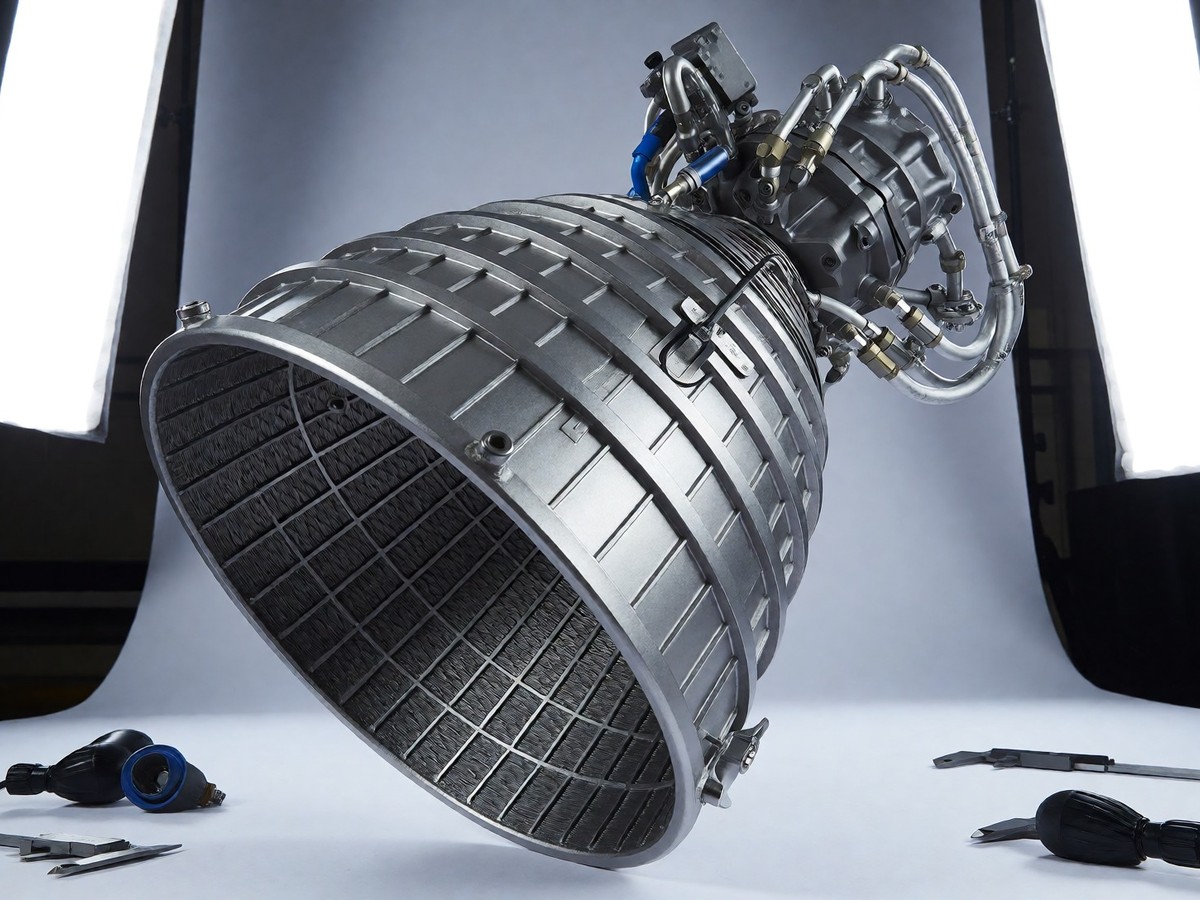
Blue Origin intends to launch more than 1,000 times a year by reducing vehicle manufacturing costs and increasing payload capacity for geostationary orbit and the Moon. CEO Dave Limp announced these upgrades at the UP.Summit conference in Florida. The company is already test firing a new engine called Northstar, which will replace the BE-4 engine that powers the first stage of New Glenn. The Northstar engine provides 715,000 pounds of thrust, which exceeds the 640,000 pounds of thrust from the current BE-4 engine. Northstar burns methane and liquid oxygen using an oxygen-rich staged combustion cycle and a single-shaft turbopump architecture. Blue Origin aims to manufacture the Northstar at 25 percent of the cost of a BE-4 and can eventually assemble each engine in less than a day. Blue Origin’s engine and third stage upgrades clearly improve the New Glenn vehicle’s capability.
Engine and stage specifications
The Northstar engine is a simplified but more powerful version of the BE-4 engine, which contains half the number of parts, 30 percent less mass, and 65 percent 3D-printed components. Blue Origin will continue to manufacture the existing BE-4 engine for United Launch Alliance to power its Vulcan rocket. The company is also developing a hydrogen-oxygen third stage called GS3 to offer direct injection to geostationary orbit and Earth-escape trajectories. The GS3 fits within an interstage to preserve the full fairing volume for customer payloads.
| New Glenn Variant | Payload to Geostationary Orbit | Payload to Translunar Injection |
|---|---|---|
| 7×2 variant | 8 metric tons | 10 metric tons |
| 9×4 variant | 14 metric tons | 20 metric tons |
Blue Origin can use the GS3 on both the 7×2 and 9×4 variants of the New Glenn rocket. The GS3 uses the BE-7 engine, which uses liquid hydrogen and oxygen propellants. Because hydrogen is the smallest atom, it leaks easily, and Limp noted that thermal cycling and mechanical strain can cause composite tanks to crack and exacerbate molecular hydrogen loss. However, Blue Origin recently completed a composite liquid hydrogen tanking test at Launch Site One in Texas where the tank held 100 percent of the maximum expected operating pressure for 2.5 hours and 150 percent of that pressure for 10 minutes. The company is designing a 5.5-meter diameter composite tank for this stage. The company aims for a GS3 debut in 2028 for a customer already signed up for cislunar space. Limp said, "We are open for business."