Boulders found around Didymos and Dimorphos
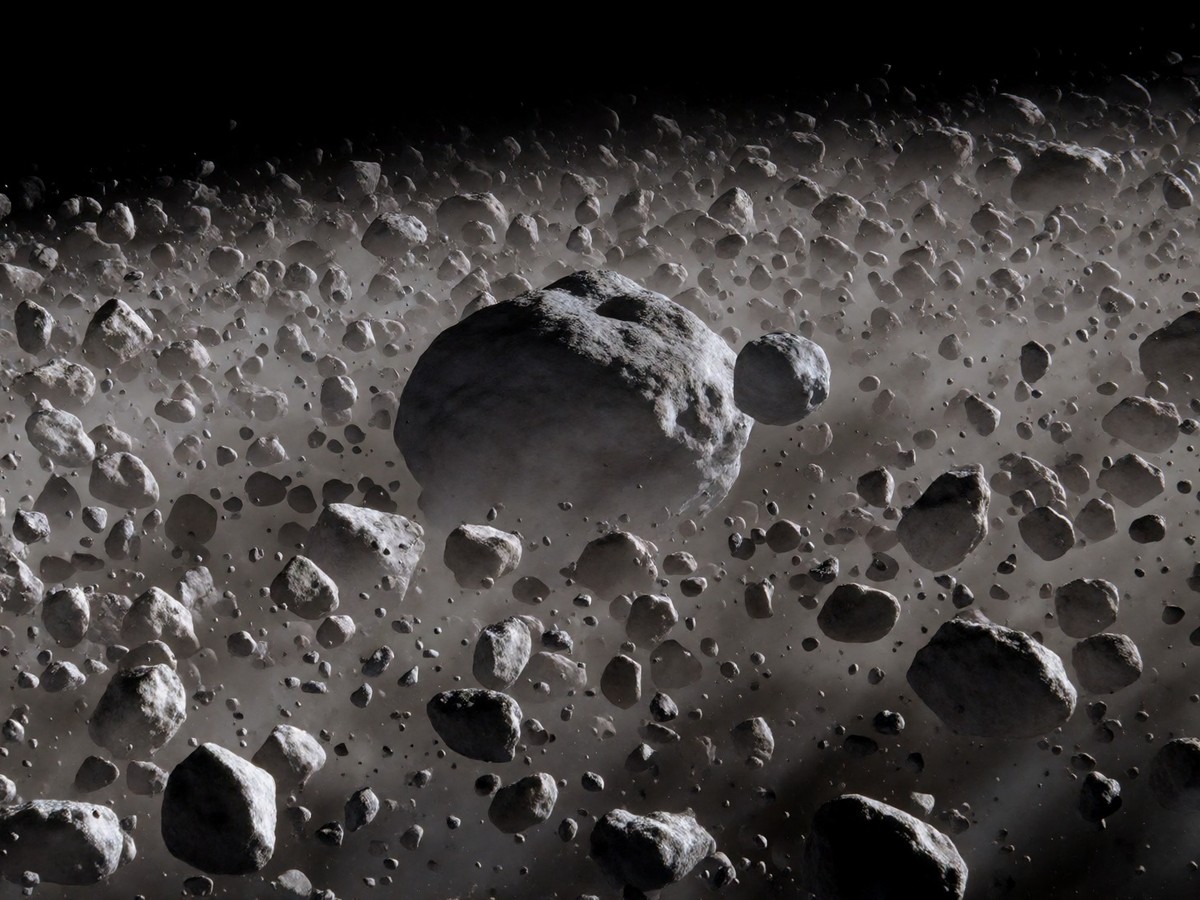
The Hera mission clearly reveals a chaotic scene of hundreds of rock fragments around the asteroids. ESA released an image on Wednesday combining 11 long exposure frames from the hyperspectral camera. Image processors on the ground digitally removed the relatively bright Didymos and Dimorphos to reveal a panoply of dimmer streaks and dots. These dots are rock fragments ranging in size from a football to a washing machine. Naomi Murdoch, a planetary scientist at the Institut Superieur de l’Aeronautique et de l’Espace in Toulouse, France, says that when Hera approached Didymos and Dimorphos, the team realized the asteroids were not alone. Murdoch says the mission found hundreds of companions orbiting the two asteroids. It is the first mission to undertake a sustained study of an asteroid with its own moon.
Scientists caution that they need more information before they can state with surety whether the boulders were thrown off Dimorphos when DART slammed into it or if they are relics from the creation of Dimorphos in the ancient past. Murdoch says the team must characterize these boulders in detail to understand if they link to DART, if they link to another process, or what the consequences might be for other asteroid systems in the Solar System. This investigation will help determine if the debris is related to the DART impact or another process.
| Mission Component | Detail |
|---|---|
| CubeSat deployment | January |
| Juventas proximity | within a couple of miles |
| Fragment scale | football to washing machine |
Navigational risks for CubeSats
The boulder field creates significant navigation challenges for the spacecraft. This debris field poses an added risk for the two small CubeSats Hera will deploy in January. Margherita Cardi, the project manager for the Milani CubeSat, says she saw a couple of images that "didn’t reassure" her and reports a "mix of excitement and panic." Claudia Balossi, the spacecraft systems engineer for the Juventas CubeSat, says the mission’s planned trajectory will take the craft right through the boulders as it moves within a couple of miles of the asteroids. Juventas will then move toward a landing attempt on Dimorphos to measure the miniature world’s tenuous gravity field.