Growing food in lunar soil
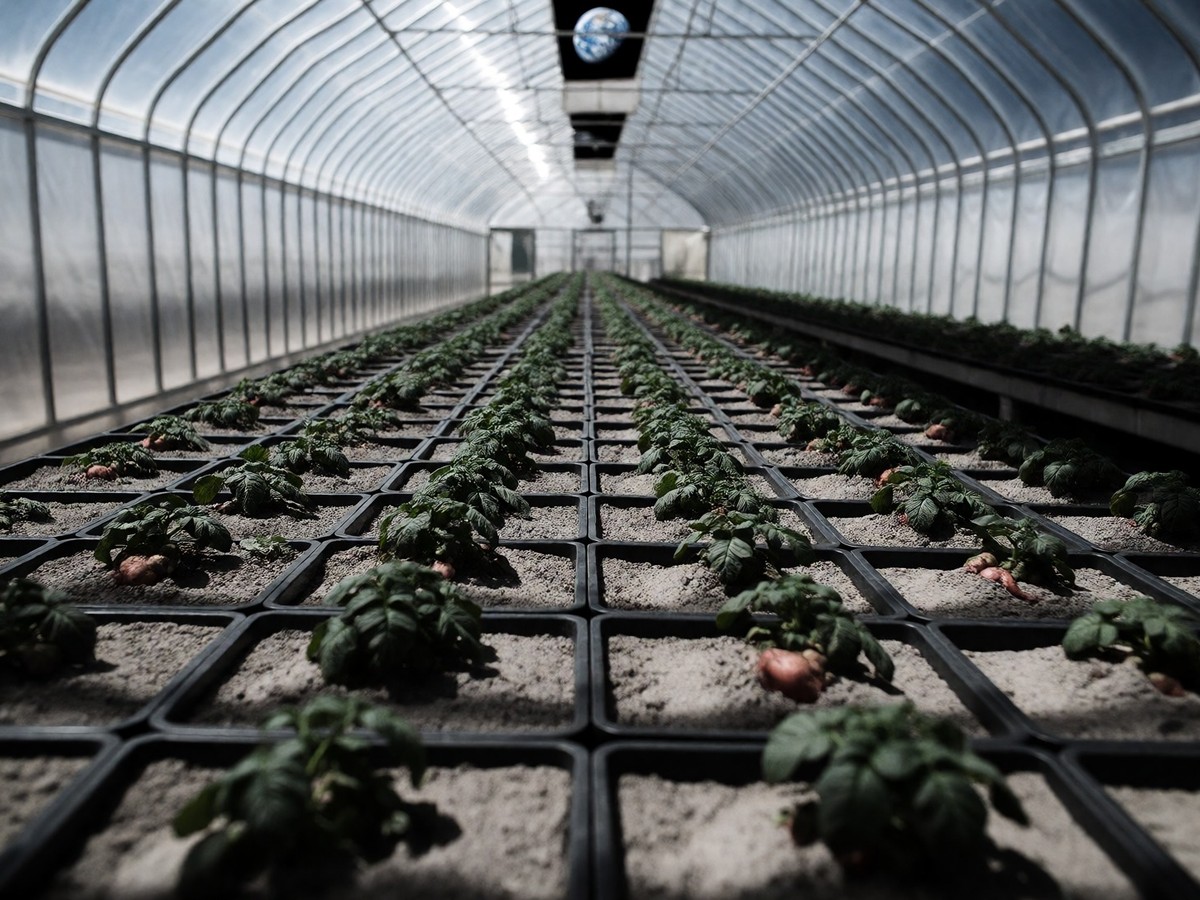
Aymeric Goyer, a plant biologist at Oregon State University, led a study published in npj Microgravity where researchers grew Modoc potatoes in "lunar regolith simulants" containing varying levels of vermicompost. The study found that potatoes grown in lunar material without vermicompost produced almost no roots or tubers because the regolith lacks nitrogen and contains heavy metals that can become toxic to plants. Potatoes planted with as little as 5% vermicompost grew some roots, but at 30% vermicompost, the yield was identical to potatoes grown in Earth soil. The Modoc cultivar has reddish skin and white flesh and provides more calories per land area than many other crops. Goyer noted the plants provide more potassium than a banana, are rich in vitamin C, and have a high satiety index. Because organic matter helps make heavy metals less available to the plants, the vermicompost prevents the potatoes from over-accumulating these toxins. The researchers used "lunar regolith simulants," which are engineered, Earth-based materials that replicate the properties of moon dust and soil, and they added organic matter made when red wigglers, or Eisenia fetida, break down food scraps. Goyer said the research envisioned lunar greenhouses in the future to sustain human life.
Lunar base food supplies
NASA expects to return astronauts to the moon in 2028, while China aims to reach the lunar surface before 2030. These missions to the lunar south pole will likely require food production because long-term bases cannot rely on Earth for all supplies. In the Oregon State University experiment, researchers used small pots that produced potatoes weighing less than 10 grams, so Goyer said they used the harvested samples for lab analyses instead of eating the tiny potatoes. A second study used larger pots to produce potatoes of the size typically seen at a store. Don Pettit, a NASA astronaut, previously grew a purple potato named "Spudnik" in the microgravity of the International Space Station. In the weightlessness of orbit, roots generally head towards moisture but sometimes they get confused and grow "upwards," Pettit wrote. Other scientists are investigating chickpeas, tomatoes, lettuce, and legumes like alfalfa for lunar cultivation. In March, a study documented how researchers grew chickpeas in lunar regolith supplemented with vermicompost. David Handy, an Oregon State space biologist, says these technologies can help produce food in regions with low agricultural output, such as desert communities or inner cities. Handy says these technologies can improve soil quality and remediate contaminated soils to improve sustainable agriculture on Earth. A 2017 study at the International Potato Center in Peru concluded that potatoes could sprout on Mars using a container that mimics Martian temperatures and atmospheric conditions.