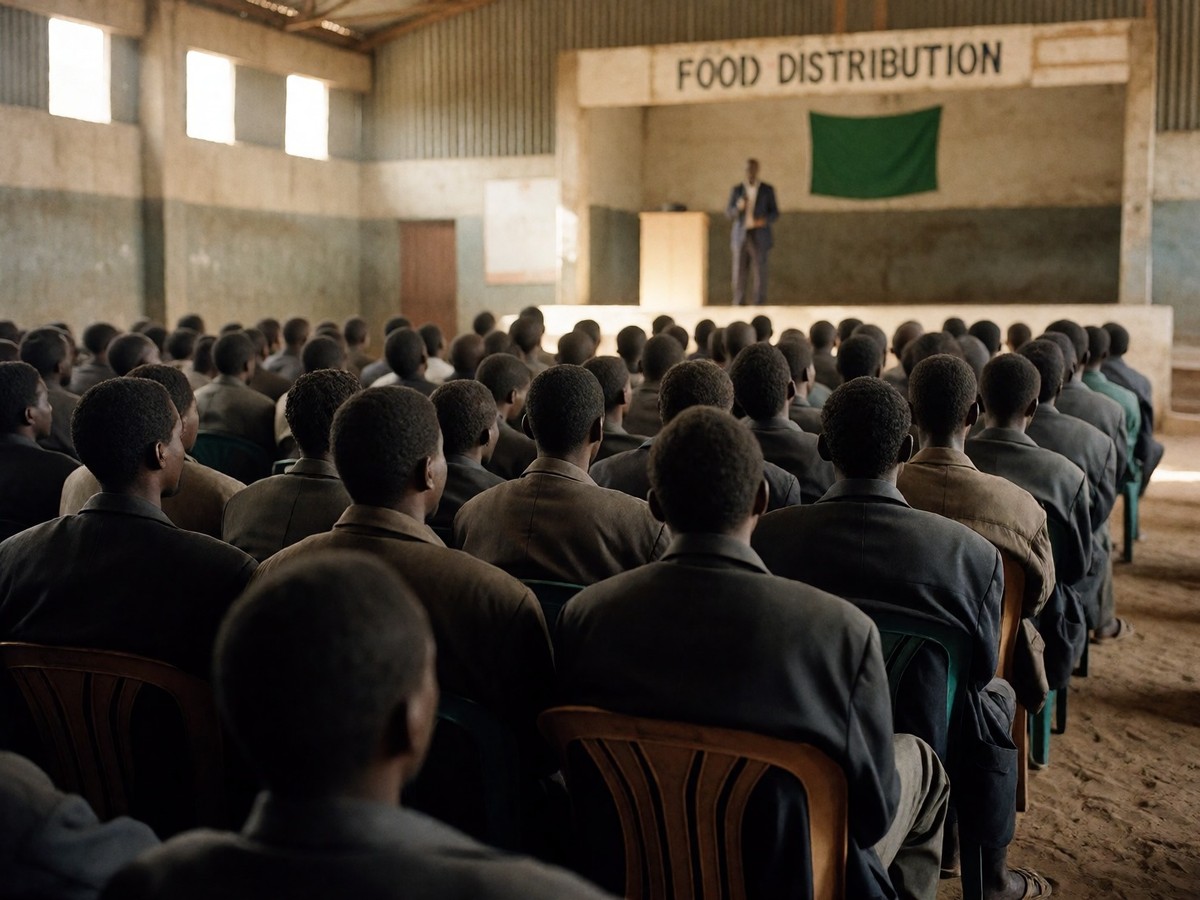
Al-Shabab distributed rice, pasta, sugar, cooking oil, and beans to hundreds of families in Somalia throughout August. The group, which controls large parts of rural southern and central Somalia, uses social media and radio to advertise this humanitarian work. One local woman said, "May God reward them," in an Al-Shabab video. This strategy aims to win over local communities. In Syria, Ahmed al-Sharaa rose to power in December 2024. He was once wanted by the United States and previously led the Nusra Front and Hayat Tahrir al-Sham as Abu Mohammed al-Jolani. His administration involves working with non-Islamist groups and engaging with foreign powers like Russia to avoid an Islamist takeover. During his November 2025 visit to the White House, US President Donald Trump praised the former insurgent as a "very strong leader" and joked about how many wives the Syrian leader had. While his success inspires some, the Islamic State calls him an "apostate" and carries out attacks against his forces. This divide between hardliners and pragmatists has fueled a bitter online debate since 2025, with rival voices publishing competing books to defend their positions and exchanging accusations of betrayal.
Localized strategies and rebranding
The JNIM group in the Sahel dropped its Al-Qaeda branding in late 2024 to focus on local problems and portray itself as a defender of ordinary people against corrupt rulers. In April, JNIM joined forces with Tuareg separatists to launch an offensive against Mali’s military rulers. The group accused the Mali government and its Russian allies of killing civilians and suggested it could maintain "balanced relations" with Russia. Wassim Nasr reports that one camp in JNIM favors the Taliban approach of taking power through force, while the current dominant camp prefers the HTS model of making compromises. Aman Bezreh says the rebranding progresses slowly because the group simultaneously expands into new territories and recruits from diverse pools.
| Group/Leader | Strategy Type | Current Status |
|---|---|---|
| Ahmed al-Sharaa | Localist/Pragmatic | Controls Syria |
| JNIM | Localist/Pragmatic | Active in Sahel |
| Al-Shabab | Localist/Pragmatic | Active in Somalia |
| Islamic State | Globalist/Hardline | Lost 2019 territory |
Al-Shabab reached a truce in October with the Ma’awisley clan in Somalia. Abdullahi Guji reports this truce removed Ma’awisley fighters from the front lines, which weakens the Somali government’s campaign. Guji also notes the group may test its ability to establish itself as an alternative government across wider parts of the country as African Union forces withdraw from Somalia in December.
Western distractions and historical patterns
The 2021 US withdrawal from Afghanistan and the Taliban’s return to power reinforced the belief that Western governments have bigger fish to fry. The 2021 Taliban takeover in Afghanistan showed how an Islamist movement can use diplomacy and local alliances to seize control. Colin Clarke says jihadist groups learn that avoiding US confrontation helps them "live to fight another day." He questions if this pragmatic shift serves as a "Trojan horse strategy" to gain power without abandoning long-term goals. This follows a history where the 2011 Arab uprisings sidelined Al-Qaeda in several nations, and in 2012, Al-Qaeda leaders in Mali advised militants not to rush into imposing strict rules so they could maintain local support.
The Islamic State remains firmly committed to its global ambitions and rejects all compromises. In Yemen and Libya, groups used the name Ansar al-Sharia to win local support without the Al-Qaeda brand. Meanwhile, Al-Qaeda’s Yemen branch, AQAP, continues to call for "lone wolf" attacks against Western and Jewish targets. These groups show that the global jihadist dream has not succeeded, but the movement is far from finished.