Minister resigns after fatal rail accidents
Spanish Transport Minister Oscar Puente resigned on November 3 following a high-speed train collision that killed at least 69 people. He told the Congress that a transport minister in a country like Spain cannot remain in office after two serious accidents occurred within less than a year. This tragedy near Urda, south of Madrid, happened on October 28 when a Renfe high-speed train struck a stationary Iryo train. Before this incident, a train crash in Andalusia in January killed 46 people on the same Madrid-Sevilla route. Protesters gathered in front of the Ministry of Transport to demand his resignation, and about 500 people clashed with police after some individuals threw bottles and flares, even as political rivals and unions joined the calls for him to step down. Prime Minister Pedro Sanchez stated that the occurrence of two similar disasters within one year is unacceptable and noted that public trust in the high-speed rail network has shaken.
Investigation into the Urda collision
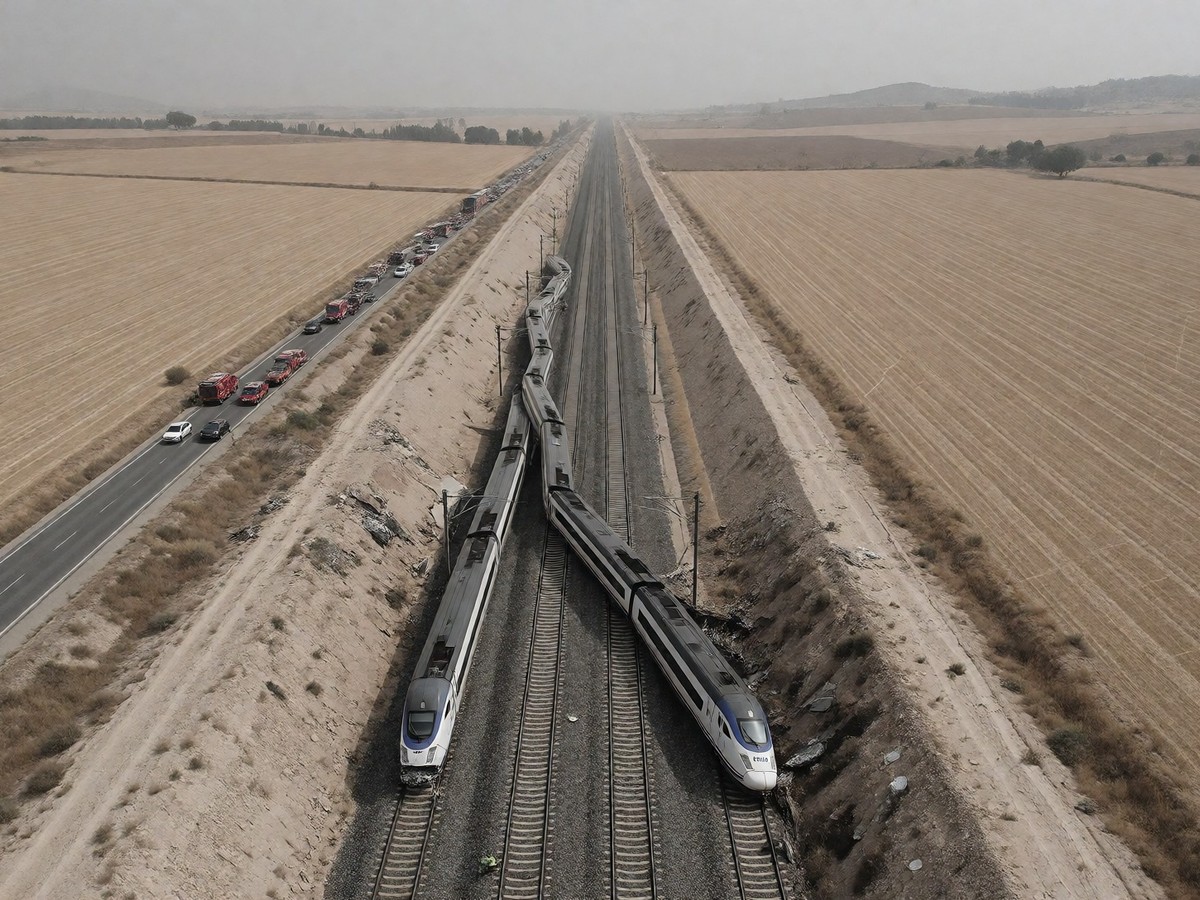
Investigators released a preliminary report stating the Renfe train was traveling between 160 and 200 km/h at the time of the impact. This collision caused at least five carriages to derail and roll into a ditch, resulting in a scene where passenger Fernando Seco saw blood and many dead people everywhere.
| Crash Data | Figures |
|---|---|
| Renfe train speed | 160 to 200 km/h |
| Passengers in first train | 146 |
| Passengers in second train | 397 |
| Total fatalities | At least 69 |
Leaked audio recordings from the Madrid control center revealed that officials permitted the high-speed train to move even though another train sat stationary on the tracks approximately 25 kilometers ahead. Critics blame the disaster on corruption and insufficient investment rather than human error. Sebastian Herrero, 46, reported feeling a very violent blow after the train stopped and noted that people around him suffered broken noses and arms while smoke filled the area. Seventeen-year-old Eduarda told Cadena Ser that she saw dead people under the trains and heard people screaming in panic. Another passenger named Miguel told radio station COPE that a very loud noise, like a massive crash, lasted for 10 seconds before he saw a mangled train through a window. Sixty-year-old Inaki told El Pais that he was thrown to the ground after the heavy impact. The accident was one of the heaviest railway disasters in modern European history and the deadliest in Spain since 2013.