Budget size and division
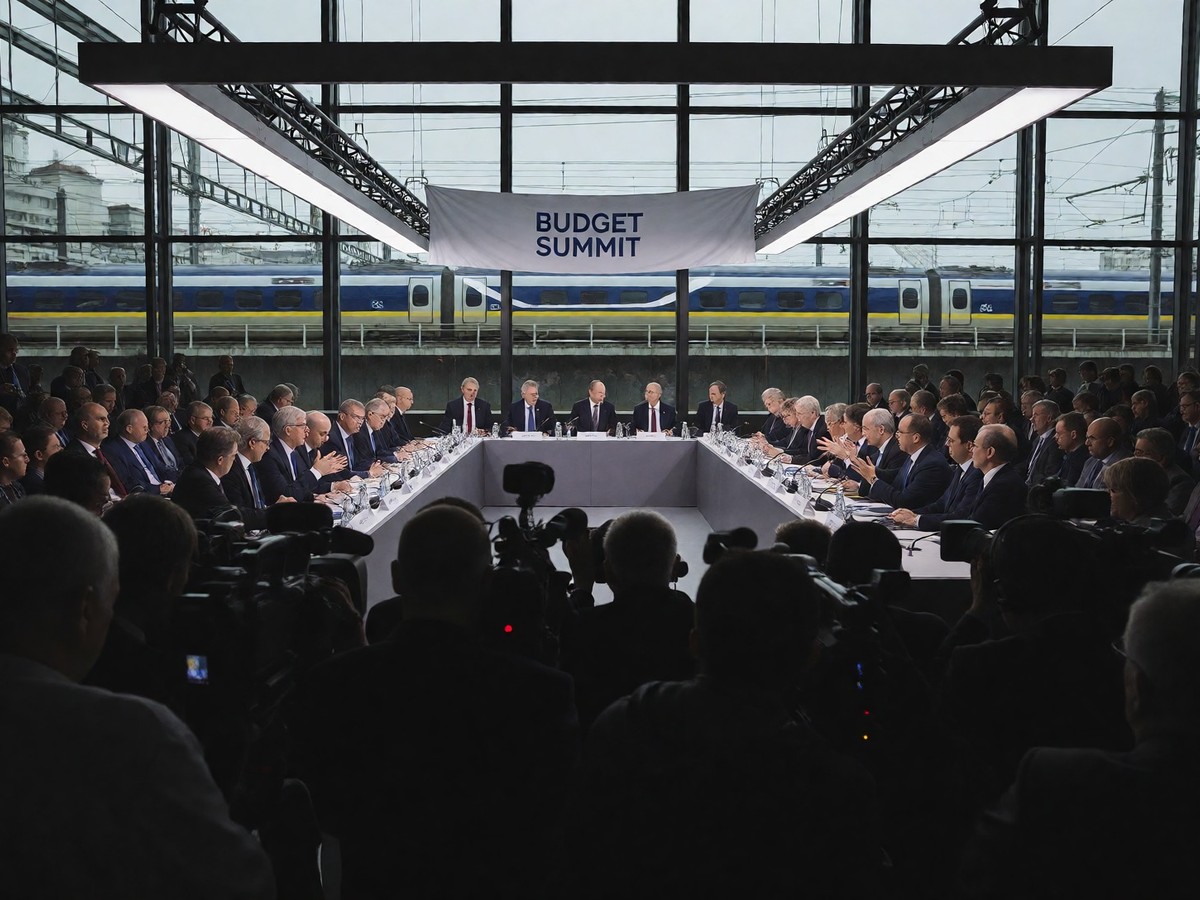
EU leaders gather in Brussels this Thursday for two days of budget talks that rival governments do not expect to end with an agreement. European Council President Antonio Costa wants countries to strike a final deal in less than a month, but he faces deep divisions over a budget proposal that envisages €44 billion in additional cuts from a previous plan. I see no signs of the convergence diplomats desire, as one senior diplomat noted that Costa needs a difficult meeting before achieving a successful one in December. All leaders will discuss the EU budget and a €45 billion loan to Ukraine during lunchtime on Thursday, and then they will hold several hours of meetings in smaller groups or one-on-one sessions. Germany and the Netherlands lead a bloc of northern states that push for a smaller budget focused on defense and competitiveness. This group faces opposition from Italy and Poland, who demand higher spending on traditional areas like farming and poorer regions. Greek Prime Minister Kyriakos Mitsotakis said in a statement on Wednesday evening that Europe cannot demand more of itself while choosing to invest less. German Chancellor Friedrich Merz claims that Costa’s proposal amounts to a 40% increase over the 2020 budget, but rival governments argue this figure ignores inflation and the 10% of the total budget needed for post-Covid debt repayments. EU budget commissioner Piotr Serafin told the European Parliament on Wednesday that ignoring inflation is "not convincing." Diplomats preparing for the summit expect flare-ups and tensions among leaders who have signaled they are unwilling to make compromises at this stage.
Ukraine loans and tax disputes
The €45 billion loan for Ukraine creates a massive headache for the negotiating teams. Germany pays about one quarter of the total EU budget and uses this leverage to pressure Hungary, Slovakia, Czechia, and Bulgaria to help repay the borrowing costs. While Hungary, Czechia, and Bulgaria show openness to contributing, Slovak Prime Minister Robert Fico remains more reluctant to support the plan. A Bulgarian official suggested a solution where the EU pays the borrowing costs for the Ukraine funding that does not finance military spending, but most countries reject this idea. One senior diplomat said there is no menu in Europe where you decide what to pay and what you do not. Costa faces an uphill battle to convince the 27 leaders to support new EU-wide taxes to bolster the budget, as every government wants to avoid the specific tax that would disproportionately affect it. The tension over the loan exists because no one expects a deal before the final summit of the year, which starts on December 17.
| Budgetary Figures | Value |
|---|---|
| Additional proposed cuts | €44 billion |
| Ukraine loan amount | €45 billion |
| Annual new tax revenue | €60 billion |
| Farmer payments (2028-2034) | Up to €297 billion |
The proposal includes five new taxes to generate €60 billion every year, but no leader will approve new taxing powers until the whole deal concludes. Poland opposes using emissions trading scheme revenues to target polluting firms, while Luxembourg objects to tobacco tax proceeds and Ireland fears a levy on tech giants could trigger U.S. retaliation.
Defense and farming priorities
I find the disagreements over defense and agriculture to be the most significant hurdles for Costa. France faces elections in April and May, and as Marine Le Pen leads the polls, President Emmanuel Macron wants to increase the ringfencing of the €297 billion in direct payments for farmers from 80% to 90%. These direct payments for farmers run from 2028 to 2034. This push annoys several other countries that must also make compromises. Regarding defense, Costa proposed allowing companies from the U.K., Canada, Norway, and Ukraine to access funding, but he left out the U.S. Macron leads a rearguard push to lock non-EU firms out of defense funding entirely, yet Romanian Defense Minister Stefan-Radu Oprea insists that U.S. arms companies need more access to the European market. Macron wants to raise the issue of defense spending during the summit to protect European industries, but the disagreement between Romania and the French presidency shows the difficulty of finding a middle ground on security spending.