Orbital manufacturing for pharmaceuticals
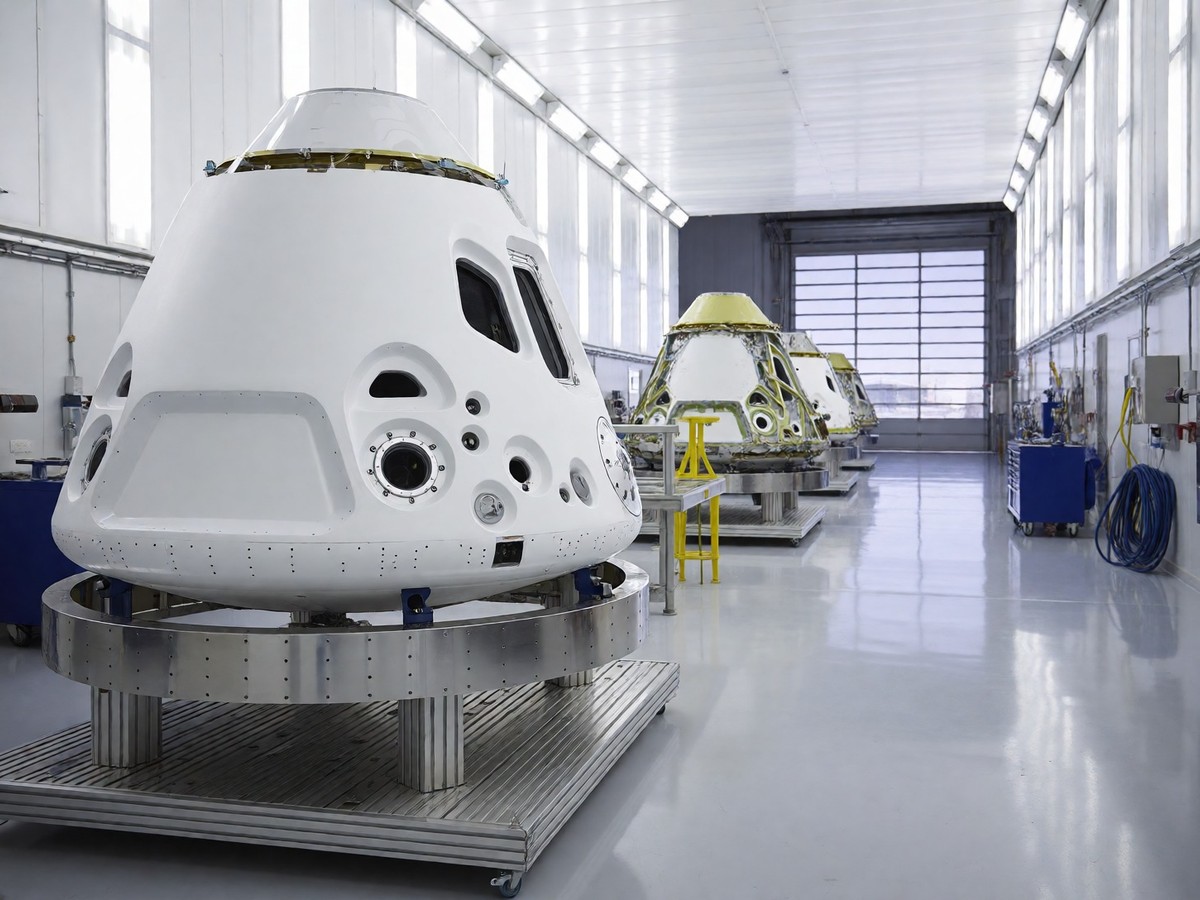
Three washing machine-sized capsules orbit 300 miles above Earth, with one growing tiny crystals of a potential cancer drug in microgravity. Varda Space Industries, a California-based firm, launched two vehicles on 1 October and a third on 20 October. The company now operates three spacecraft in orbit simultaneously for the first time. Will Bruey, Varda chief executive, says the company is the first in human history to launch multiple commercial re-entry vehicles simultaneously. These autonomous free-flyers hitch rides on SpaceX rockets and carry miniature laboratories for processing materials without astronauts. Because humans cause vibrations and require higher safety levels, these autonomous factories remove people from the manufacturing process. When experiments finish, a capsule separates, falls through the atmosphere, and parachutes into an uninhabited region. Microgravity allows crystals to grow in a more ordered way because it removes the effects of particles settling in liquids or density-driven currents. This order affects how easily drugs dissolve, how stable they are and how they can be administered. Some drugs that currently require intravenous infusions could become convenient injections through this method. The other two capsules in the current fleet test heat protection materials and navigation systems for when they plunge back through Earth’s atmosphere at hypersonic speeds.
Moving beyond the ISS
Dr. Meganne Christian, mission manager for in-space manufacturing at the UK-based Satellite Applications Catapult, says removing gravity-induced effects allows for more ordered crystal growth. This process could also produce higher-performing semiconductors or graphene with fewer defects. Dr. Christian says she would personally like to try and make graphene in microgravity because it is an incredible material that usually has many crystal defects in practice. The absence of air in space could also help produce purer crystals with fewer defects. While scientists have used the International Space Station (ISS) for microgravity experiments for decades, the station was not designed for manufacturing. Dr. Ryan Reeves, deputy chief scientist for the ISS National Laboratory, says the ISS was not necessarily designed with manufacturing in mind. UK-based BioOrbit recently sent a microwave-sized laboratory to the ISS to work toward producing self-injected cancer drugs. Other companies like Cardiff-based Space Forge aim for different applications. Space Forge explores a hybrid approach using semiconductor crystals grown in space as templates for growing larger quantities on Earth, much like a sourdough starter. Andrew Bacon, Space Forge co-founder and chief technology officer, says the company’s first spacecraft, ForgeStar-1, recently demonstrated processes for manufacturing semiconductor "seed wafers" although it has yet to produce a finished material and return it to Earth.
| Company | Primary Focus | Recent/Planned Activity |
|---|---|---|
| Varda Space Industries | Pharmaceuticals | 3 spacecraft in orbit; 7 missions in 2027; 10 missions in 2028 |
| BioOrbit | Self-injected cancer drugs | Sent microwave-sized lab to ISS |
| Space Forge | Semiconductor crystals | Developed ForgeStar-1; full process demo before 2030 |
Economic and regulatory hurdles
Varda plans to launch seven missions in 2027 and another 10 missions in 2028. Michael Reilly, Varda chief strategy officer, says frequent experiments fit the speed of modern drug development better than waiting a year or ten years between tests. However, Dr. Meganne Christian says businesses must identify high-value use cases where it makes sense to do the work in microgravity because manufacturing in orbit will not be commercially viable for every application. To reach a commercially viable point, Dr. Christian says the process needs to be done again and again and again to demonstrate repeat performance. Reliability remains a hurdle because the process must work consistently to justify the expense. Andrew Bacon, Space Forge co-founder and chief technology officer, says the company’s first spacecraft recently demonstrated manufacturing processes, though it has yet to produce a finished material and return it to Earth. He hopes to demonstrate the entire manufacturing and return process before 2030. Because the market is changing, Bacon says people are starting to take the industry seriously. The UK Medicines and Healthcare products Regulatory Agency (MHRA) expects to publish a plan later this year to clarify how existing medicines regulations will apply to drugs manufactured in orbit.