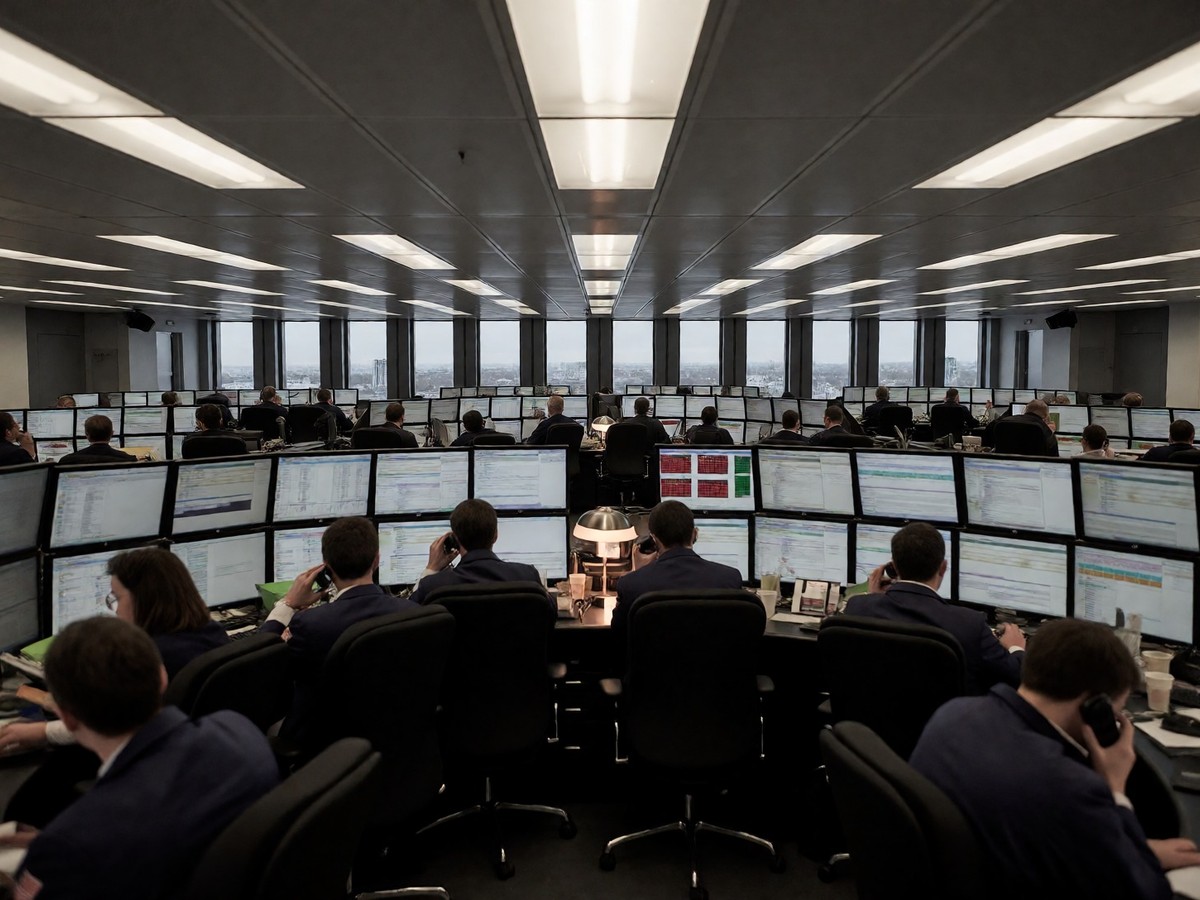
European and Asian stock markets fell sharply on Friday following the Democrats’ decisive victory in the midterms, which triggered a rout in US tech stocks the day before. The sell-off on Wall Street on Thursday was followed by sharp declines in Asia, with Japan’s Nikkei 225 index sinking 6% and South Korea’s Kospi index tumbling more than 6.5%. Investor sentiment then reached London, where the FTSE 100 index dropped as much as 254 points, or 2.35%, during morning trading before clawing back some losses to close down 1%. Germany’s Dax index fell by 2%, France’s Cac 40 dropped by 0.8%, and Spain’s Ibex lost 0.6%. Susannah Streeter, chief investment strategist at Wealth Club, noted that "big worries are colliding," specifically regarding the potential slowdown in datacentre build-out. This risk threatens to shred the spending spree underpinning the boom right as investors become nervous about returns on massive investments. Christopher Forbes, head of Asia and Middle East at CMC Markets, described the situation as "a bit of a disaster." He reported that clients who were long index and long stocks got carried out all night and all day, leading to margin calls and complaints because people are wedded to their positions. Chris Beauchamp, chief market analyst at IG, warned that with AI fears still prominent, there is a risk that much more selling is to come. Investors remain on watch for a potential resumption of the Iran conflict and are nervously watching the oil price after its slump earlier in the week.
Despite the sharp losses, most indices remain up for the year. The Nasdaq Composite index is up 6.35% since the start of January, though it sits more than 10% below its peak. The FTSE 100 has gained almost 7.5% this year but is now more than 300 points below the record high set in July. On Wall Street, signs of easing jitters appeared on Friday when tech stocks rose, lifting the S&P 500 share index by 0.3% and the tech-heavy Nasdaq by 1%. This recovery followed a stronger-than-expected employment report showing the US economy added 165,000 new jobs in October, pulling the unemployment rate down to 4.1%. However, the previous day had been brutal. The Nasdaq posted its worst day in 19 months after slumping 5.5% on Thursday. Chip stocks led the slump, with memory maker SanDisk tumbling by 22% and hard drive maker Western Digital falling by 17%. The Vix, known as the fear index, jumped by more than 60% to its highest levels since the early weeks of the Iran war. Stock market tremors also hit the London Metal Exchange, where copper is poised for its biggest weekly fall since March. Benchmark three-month copper dropped 0.61%, leaving it positioned for a 2.79% fall this week. Craig Lang, a principal analyst at CRU, said the price of copper is increasingly influenced by the AI market and sentiment towards datacentre expansion. Mohit Kumar, an economist at Jefferies, did not expect a quick rebound from Thursday’s losses but did not believe it marked the start of the unwind of the AI trade. He argued that AI investment has been a driver of US growth and that Democrats would be reluctant to let those jobs move outside the country.
Texas Democrats face healthcare hurdles
Texas Democrats spent three decades trying to regain control of the governor’s mansion and other top state leadership positions. On Election Day, they pulled off a decisive upset, taking statewide offices and the state House partly due to voter anger over healthcare costs. The traditionally deep-red state elected James Talarico to the U.S. Senate, and Democrats picked up a seat in the U.S. House despite efforts by Republicans to draw districts in their favor and at least $225 million spent by Elon Musk to elect Texas GOP candidates. Democratic Gov.-elect Gina Hinojosa defeated Republican Gov. Greg Abbott, who had never lost an election before this one. Hinojosa will become the first Democrat to occupy the governor’s mansion since Ann Richards moved out in 1995. She and Lt. Gov.-elect Vikki Goodwin are scheduled to be sworn in on Jan. 19, a week after the legislative session opens. They have two months before the next legislative session to figure out how to deliver on promises regarding healthcare affordability and abortion. James Henson, director of the Texas Politics Project, said Democrats are putting together an agenda in what is essentially a "dog catches car" scenario. About 5 million of Texas’ nearly 32 million residents lack health coverage, including 1 million children without insurance. Texas is one of 10 states that did not expand Medicaid to cover more low-income adults. New moms in Texas continue to die at higher rates than they do nationally. Healthcare costs topped lists of voter concerns in the state according to polls in recent months. Dorcaus Robinson, a resident of Houston, pays $730 a month for an ACA health plan, up from $500 a month last year. She relies on her plan to cover a shot that would otherwise cost $10,000 a month. When her insurer called after the election to let her know her premium would be rising again next year, she wondered if it was too late for her to benefit from the blue tsunami.