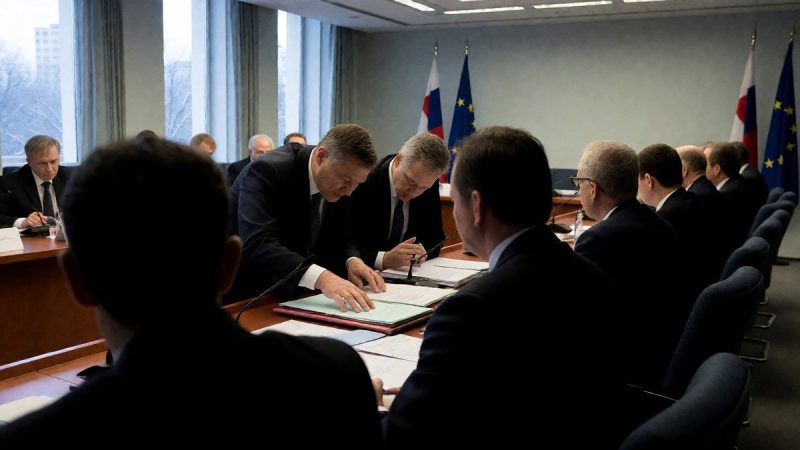
Ukrainian President Volodymyr Zelenskyy declared that Vladimir Putin "lives in a different reality" after Russian delegates claimed at the start of trilateral discussions in Abu Dhabi that Moscow controls half of the Donbas region. The American-led meetings between Ukraine, Russia, and the United States began on Tuesday, marking the first three-sided negotiations since February. Zelenskyy described the initial day as constructive and substantive, noting that US officials confirmed Ukraine’s assessment of battlefield conditions rather than accepting the Russian narrative. He added that he could draw a picture where he fully occupies Russia, but such claims are false because they ignore the actual state of territorial control on the ground.
Security architecture and diplomatic shifts
Zelenskyy expressed happiness with changes in the approach by US mediators Jared Kushner and Steve Witkoff during a press conference in Copenhagen. "I see changes. I’m very happy with what I hear. We will see what can be done," he stated regarding the evolving peace talk strategies. The agenda included formulating a new security architecture for Europe, an idea raised earlier by Russian foreign minister Sergei Lavrov. However, Zelenskyy noted that all parties remain cautious because nobody fully understands the final objectives, and no one has seen the documents discussing what Americans negotiated with Russians. US officials report they seek a "final end" to the war through a long-term security framework between Russia and Europe. European leaders worry that Russia may insist on hardline demands requiring NATO to roll back its military footprint across eastern Europe, which would leave allies vulnerable to Moscow’s influence. This concern creates friction within the alliance as diplomats try to balance pressure on Kyiv with maintaining collective defense commitments against potential aggression.
Military actions and budget disputes
While talks proceed, Ukrainian Foreign Minister Andrii Sybiha urged US Secretary of State Marco Rubio to accelerate interceptor deliveries as Russia ramps up attacks on energy infrastructure. Sybiha pressed Washington to maintain pressure on Moscow even as diplomatic efforts continue, stating Ukraine remains prepared to discuss de-escalatory measures like ceasefires covering the Black Sea and energy sites. A drone attack sparked a fire at the Ust-Luga port, a major western oil hub that regional governor Aleksandr Drozdenko said was hit by a UAV. Teams worked to extinguish the blaze at this repeatedly targeted facility. Meanwhile, Latvia and Lithuania warned residents in several regions to take shelter due to threats of unidentified drones entering their airspace via Russia or Belarus early Wednesday. Lithuania’s National Crisis Management Centre included Kaunas, a city of about 300,000 people, in its warning. As Ukraine targets Baltic Sea oil shipping ports, some drones have missed targets, causing security alerts in neighboring countries. Moscow accuses Kyiv of using NATO airspace as cover, while Kyiv blames Russian signal jamming for steering drones off course. In Brussels, German Chancellor Friedrich Merz signaled he will block the EU’s seven-year budget unless there is a deal on financial aid for Ukraine. Slovak Prime Minister Robert Fico called this action "typical blackmail," angering central European leaders who benefit from EU funds but oppose participating in a new funding round for Ukraine’s war effort.