Intentional provocation in southeastern Poland
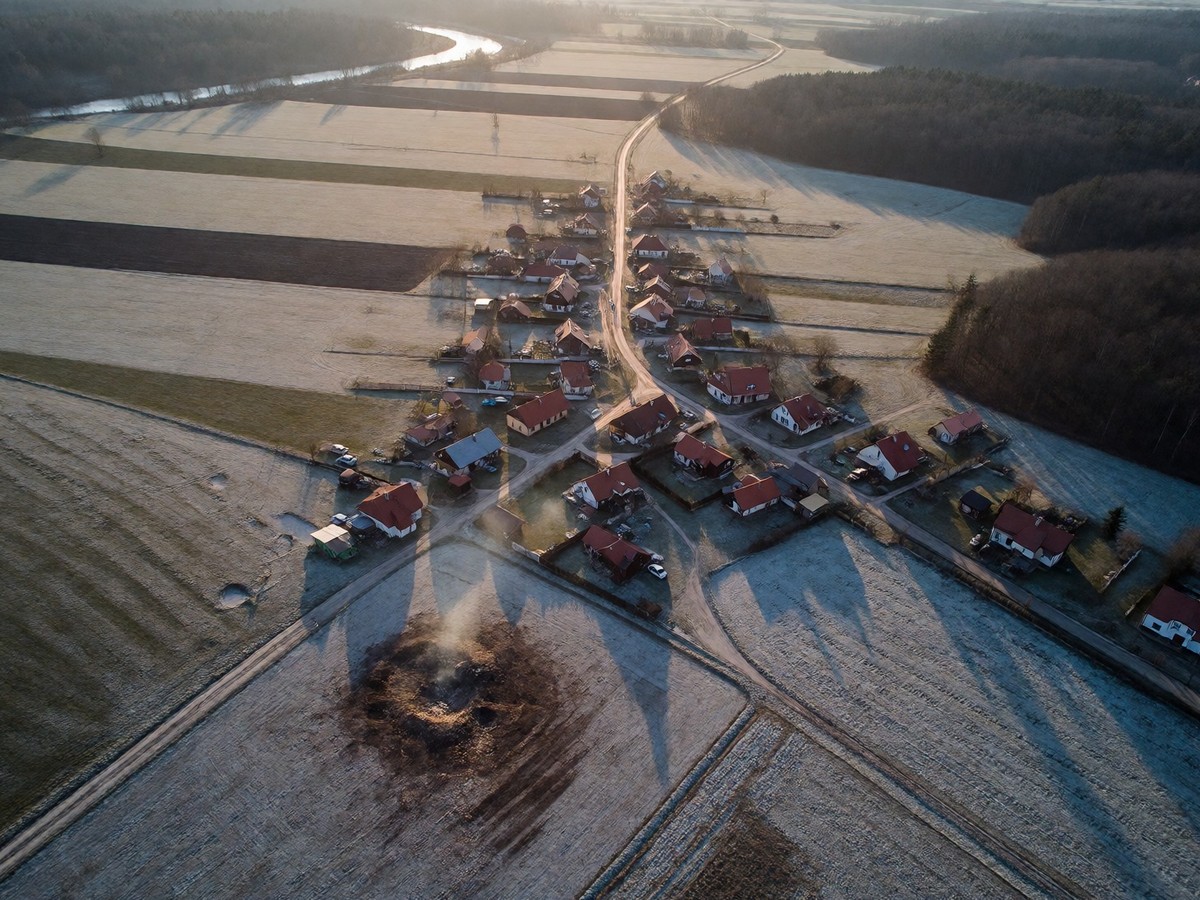
Polish Prime Minister Donald Tusk described the entry of Russian projectiles into Polish territory as an "intentional provocation" on Friday. The incident occurred while Russia launched a massive missile and drone assault on Ukraine, which killed at least five people and damaged three major bridges in Kyiv. One Russian Ch-101 cruise missile hit Nowy Lipowiec, where one object exploded. A second object was also believed to be a missile, while the third was probably a jet-powered drone, according to Defense Minister Wladyslaw Kosiniak-Kamysz. The objects fell in Nowy Lipowiec, Rudnik nad Sanem, and Molodycz. No one suffered injuries and no property damage occurred from the explosions. Tusk noted he chose his words carefully because the matter is serious. He disagreed with U.S. President Donald Trump, who told Fox News on Thursday that previous Russian incursions happened "by mistake." Tusk told reporters that U.S. officials have access to the wreckage and he believes no one will pretend this was an innocent accident. Tusk said that coming months will certainly pose great challenges for all of us.
Scale of the Russian assault and military drills
The Russian strike on Ukraine involved seven bombers, 26 Kalibr cruise missiles, 72 Kh-101 cruise missiles, and more than 500 drones. President Volodymyr Zelenskyy said Russia spread the attack across many cities and regions of Ukraine, targeting ordinary civilian infrastructure to compensate for its military and diplomatic impotence. Zelenskyy noted that Vladimir Putin proceeded with the strike after weak meetings with Donald Trump and Xi Jinping. In Poland, Maj Gen Ireneusz Nowak identified 11 objects that posed a danger to Polish airspace. Air traffic control at Rzeszow-Jasionka airport evacuated briefly during the overnight strikes. These incidents occurred as 11 countries, including the United Kingdom and France, conducted military exercises in Nowa Deba. The incursions in Nowy Lipowiec, Molodycz, and Rudnik nad Sanem took place between 50km and 100km from the exercise location.
| Russian Strike Components | Quantity |
|---|---|
| Kh-101 cruise missiles | 72 |
| Drones | Over 500 |
| Kalibr cruise missiles | 26 |
| Bombers | 7 |
Tusk hypothesized that the provocation might connect to the "coalition of the willing" exercises involving 11 nations. These drills involve preparing a multinational force to support Ukraine after a potential ceasefire. Tusk said he discussed a response with NATO Secretary-General Mark Rutte, who arrives in Warsaw on Saturday, and he also spoke with several European leaders about the gravity and the serious nature of the Russian missile incursion. Tusk argued that today’s incident shows why Poland must participate in decisions on Ukraine’s future because Warsaw has a better understanding of the threat posed by Russia.
International response and historical context
NATO Secretary-General Mark Rutte said on social media that the incident is clearly dangerous and a consequence of Russia’s war. Rutte stated that NATO scrambled jets in response to the grave violations of Polish airspace. UK Defence Secretary Wes Streeting, who is in Poland for the exercises, said the incursion is "very serious." Ukrainian Foreign Minister Andrii Sybiha said the violations demonstrate the threats Russia poses to the transatlantic community while Moscow tries to initiate discussions about a new security architecture of Europe. Sybiha said the first step toward strengthening security would probably be to cease such attacks. Tusk summoned his army and security service chiefs to an emergency meeting following the strikes. Polish authorities have warned about security risks in recent months. In July, a Russian Kh-101 missile fell in the Lublin region. In September last year, more than 20 Russian drones entered Polish airspace. In November 2022, a Russian Kh-55 missile crashed near Bydgoszcz, which is more than 400km from Ukraine, but workers found it in early 2023.