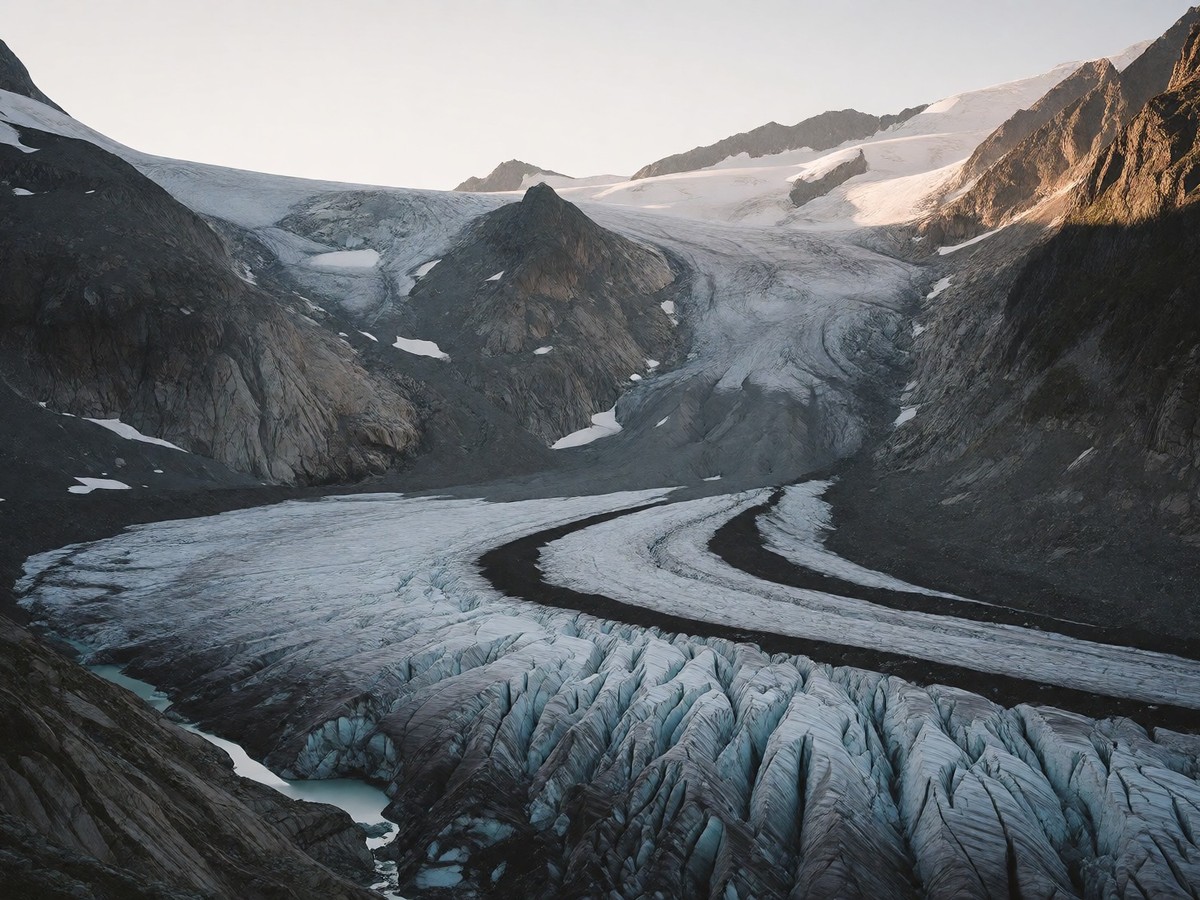
The International Cryosphere Climate Initiative and the UN Environment Programme report that overshooting the 1.5C target of the Paris agreement causes permanent and widespread losses of snow and ice. This finding exposes the myth that exceeding 1.5C to 2C or 3C remains manageable. Scientists concluded that some level of overshoot is inevitable because the planet has already heated by 1.3C since preindustrial times. The high overshoot expected under current policies, which lead to peak temperatures of about 3C, would thaw nearly all near-surface permafrost and cause severe disruption to ocean circulation. Glaciologist James Kirkham stated the cryosphere is "one of the most sensitive components of the climate system". He noted that this year, a massive ice rock avalanche on the Nepal-China border killed thousands of people and caused damage equivalent to 10% of Nepal’s GDP in a single event. Switzerland lost 20% of its glacier ice in the last five years, and thousands of glaciers worldwide will become extinct every single year in the coming decade. Much of the damage to Earth’s water in a solid state remains permanent even if temperatures return to 1.5C, as glacier melt raises sea levels and threatens water security. The report stresses that enough planet-heating carbon should be removed from the atmosphere to bring long-term warming down below 1C by 2150.
Glacial mass and emission targets
Ice sheets in Greenland and Antarctica melt about six times faster today than in the 1990s and will continue to lose ice even if warming returns to 1.5C. Scientists say a safe, long-term temperature limit for polar ice sheets sits near 1.0C or possibly even lower. Bill Hare, CEO of Climate Analytics, stated that melting ice sheets, disappearing sea ice, and acidifying oceans are all irreversible on human timescales and take climate impacts past limits of adaptability.
| Region | Glacier Mass at 1.5C Warming | Glacier Mass at 2.8C Warming |
|---|---|---|
| Rockies, Alps, Iceland, Scandinavia | 20-35% | Below 10% |
| Hindu Kush Himalayas | 83% | 41% |
A UNEP report from last month found the world must cut emissions by 18% by 2030 and by 45% by 2035 to keep temperatures from rising 1.7C above preindustrial levels. That report found there were "no good outcomes" of remaining above 1.5C. The cryosphere report, written by 80 scientists, found that current policies, which result in 2.8C of global heating, reduce glacier ice in the Rockies, Alps, Iceland, and Scandinavia to below 10%. If warming was limited to 1.5C, about 20-35% of the mass in those regions would remain. In the Hindu Kush Himalayas, where glaciers provide water for nearly a quarter of humanity, current policies leave just 41% of the ice mass, whereas 1.5C of warming would leave 83% of the mass. The latest scientific research suggests sea ice recovers more slowly than previously thought.