Emotional returns and harsh conditions
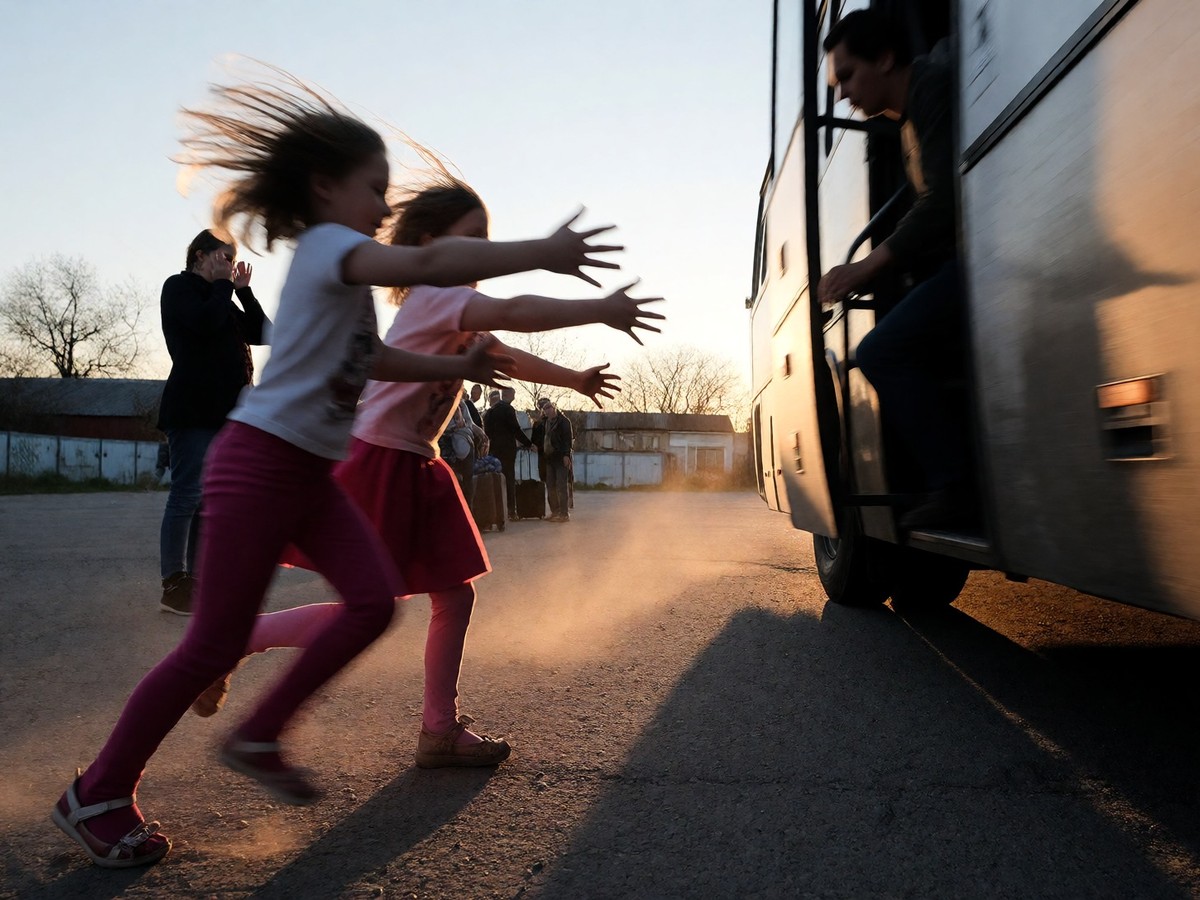
Dasha and Anya Palii ran across the tarmac and screamed toward the bus carrying their father, Mykhailo, after three years of separation. Their mother, Zhanna, clasped Mykhailo’s face and stroked his forehead, as if checking he was the same man she had left behind. Other elderly residents arrived on stretchers because they lacked food, water, and electricity in Oleshky, where Ukrainian military positions lie just 5km away. Tetiana and Volodymyr, an older couple, lived in an abandoned house after Russian forces burned their home during the first year of the war. Dmytro Lubinets, the Ukrainian human rights ombudsman, reported that the oldest evacuee was 94 and the youngest was one. Many residents in the convoy arrived hobbling on crutches or in wheelchairs. Before the war, Oleshky was home to 24,000 people, but many residents had to resort to cooking garden weeds to survive during the occupation.
Logistics and ongoing conflict
A convoy of 25 buses with space for 750 people left the town on Friday afternoon following a four-hour window for departure. The evacuees traveled from the frontline city through Russian-occupied territory to southern Russia, then flew to Belarus, before they finally drove across the northern border on Saturday to reach the Ukrainian region of Chernihiv. This movement followed a ceasefire in the Kherson region that began on Tuesday and lasts until Sunday, November 1. The city remains dangerous because the riverbank is mined and bridges across the nearby River Dnipro were destroyed. One resident told the BBC he walked through 24km of minefields to reach safety three weeks ago. While the ceasefire allowed the road out of the city to be cleared of mines, several hundred people decided to stay in the war-torn city because they did not want to leave. President Zelensky said on X that all evacuees will receive the assistance they need to adapt.
Dmytro Lubinets and his Russian counterpart, Yana Lantratova, traveled to Oleshky on Friday from Armiansk in the Russian-occupied Crimean peninsula. While Zelensky praised Lubinets for helping move evacuees, some in Ukraine recoiled at the sight of him standing beside a representative of the Russian occupying power. Lubinets said that those who decided to stay in Oleshky will receive all necessary humanitarian assistance. Russia stated on Thursday that it prepared dozens of tonnes of aid for residents who did not wish to leave. Negotiators from Ukraine, Russia, and the US plan to resume ceasefire talks in Abu Dhabi in early November after discussions were suspended earlier this year. Despite the local ceasefire, Russia attacked Ukrainian energy infrastructure, hitting electricity substations, thermal power plants, and gas infrastructure. Ukraine’s military also hit a major Russian producer of missile fuel in the Rostov region.