Investigations into incendiary attacks
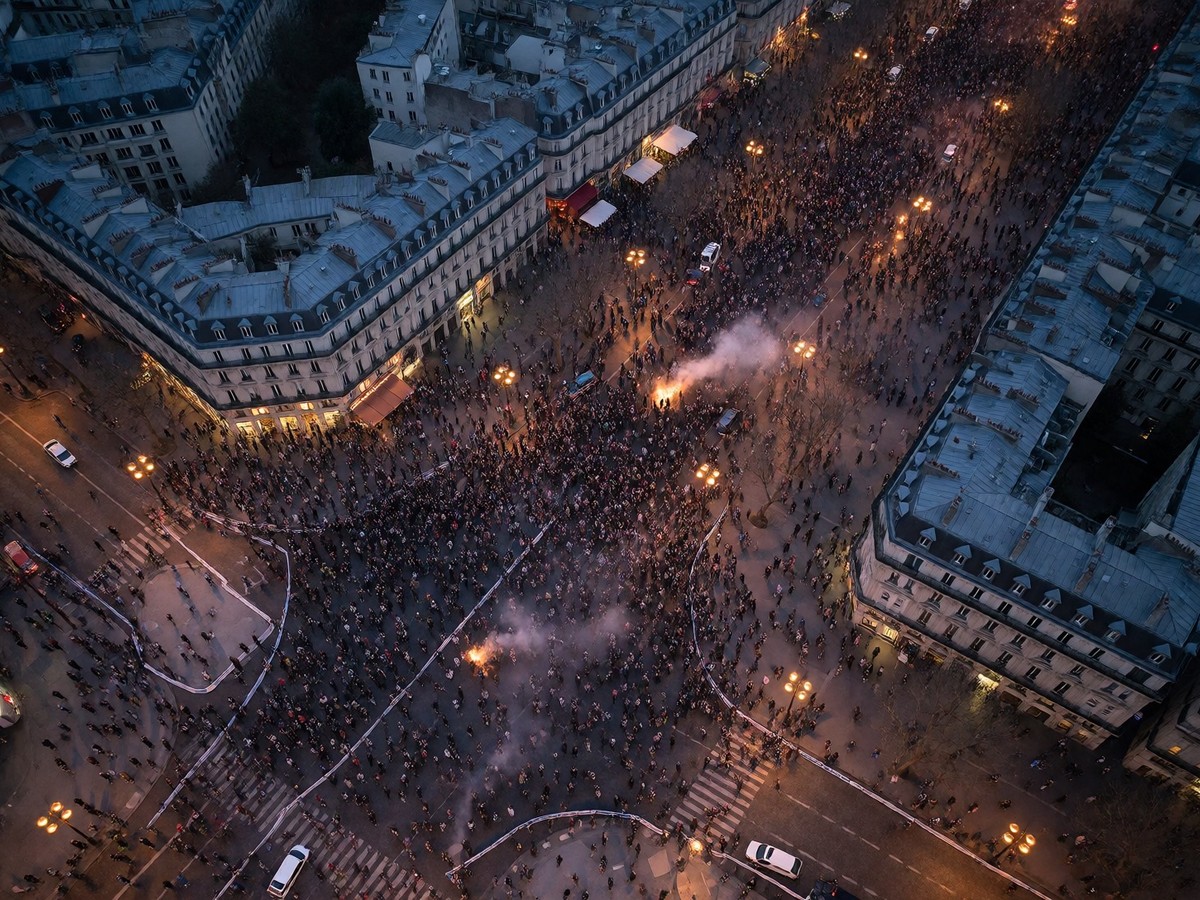
The Paris prosecutor’s office opened a formal investigation for "attempted murder of persons vested with public authority" after incendiary devices were thrown at a group of 15 gendarmes and police officers. This investigation follows an attack where a petrol bomb set a National Gendarmerie officer on fire. While mobile phone video shows the officer suffering second-degree burns, police have not yet arrested anyone for the attack. One officer said his unit "suddenly found ourselves facing several hundred hostile, well equipped adversaries" when they were recalled from leave to police the weekend protests. He noted that the incendiary device had a "far greater burning capacity than a standard Molotov cocktail" and that the attackers were not protesters but individuals there with the intent to harm those who represent the state. In the same unrest, fourteen other officers sustained wounds ranging from minor to serious, and some officers were struck by paving stones. The weekend of protests across Europe resulted in widespread urban violence. The National Gendarmerie, which is a law enforcement force under the control of the interior ministry, faced these attacks as roughly 320,000 demonstrators, some wearing Halloween costumes, took to the streets in cities like Paris, Marseille, Grenoble, Bordeaux, Lyon, and Toulouse. This unrest follows a pattern where Gilets Jaunes organizers reported dozens of protesters injured by "grenades," and Le Monde reported that police continue to use certain stun grenade models even after an incident in early October left a 15-year-old with a blown-off hand.
Unrest across European cities
In Germany, 100,000 protesters marched in over 30 cities under the "Gen Z regelt" campaign to demand better education and lower living costs. The "Gen Z regelt" organizers issued a statement distancing the group from all violence. In Frankfurt, hooded rioters damaged 17 shops, looted five of them, and threw missiles including petrol bombs at police, leading the hardline interior minister Alexander Dobrindt to demand harsh penalties for those who breached the peace. Roman Poseck, the state interior minister for Hesse, said police confronted between 1,000 and 1,500 violent troublemakers, predominantly from a migrant background, and that 54 suspects aged 13 to 29 faced arrest. Most of those arrested in Frankfurt were German nationals. Poseck said there was no point in sugar-coating the situation. The violence in Germany also reached Cologne, where police used water cannon to disperse crowds, and Berlin, where protesters attacked police with bottles and fireworks.
| Country | Reported Police Injuries | Reported Arrests |
|---|---|---|
| France | 15 gendarmes/police targeted | 770 |
| Germany (Frankfurt) | More than 100 | 54 |
| Albania (Tirana) | 200 | 269 |
In Albania, masked protesters in Tirana threw stones and firebombs at police, causing 350 people to be hurt, including 200 police officers. Authorities in Albania also arrested 269 minors during demonstrations demanding the resignation of Prime Minister Edi Rama. In Switzerland, police used water cannon, teargas, and rubber bullets to disperse rioters in Zurich during unauthorised demonstrations held under the slogan "We’ve had enough in Switzerland, too." In Basel, about 150 people smashed shop windows and set fire to bikes and bins. In Porto and Lisbon, Portugal, police cleared protest camps in Rossio Square with baton charges at 4:30am on Sunday after demonstrators marched to protest a bill regarding evictions and rent caps. The level of physical violence and looting in France on Saturday was lower than on 17 October, when 2,600 people were arrested and as many as 3,000 shops were pillaged.