The tragedy in Komyshuvakha
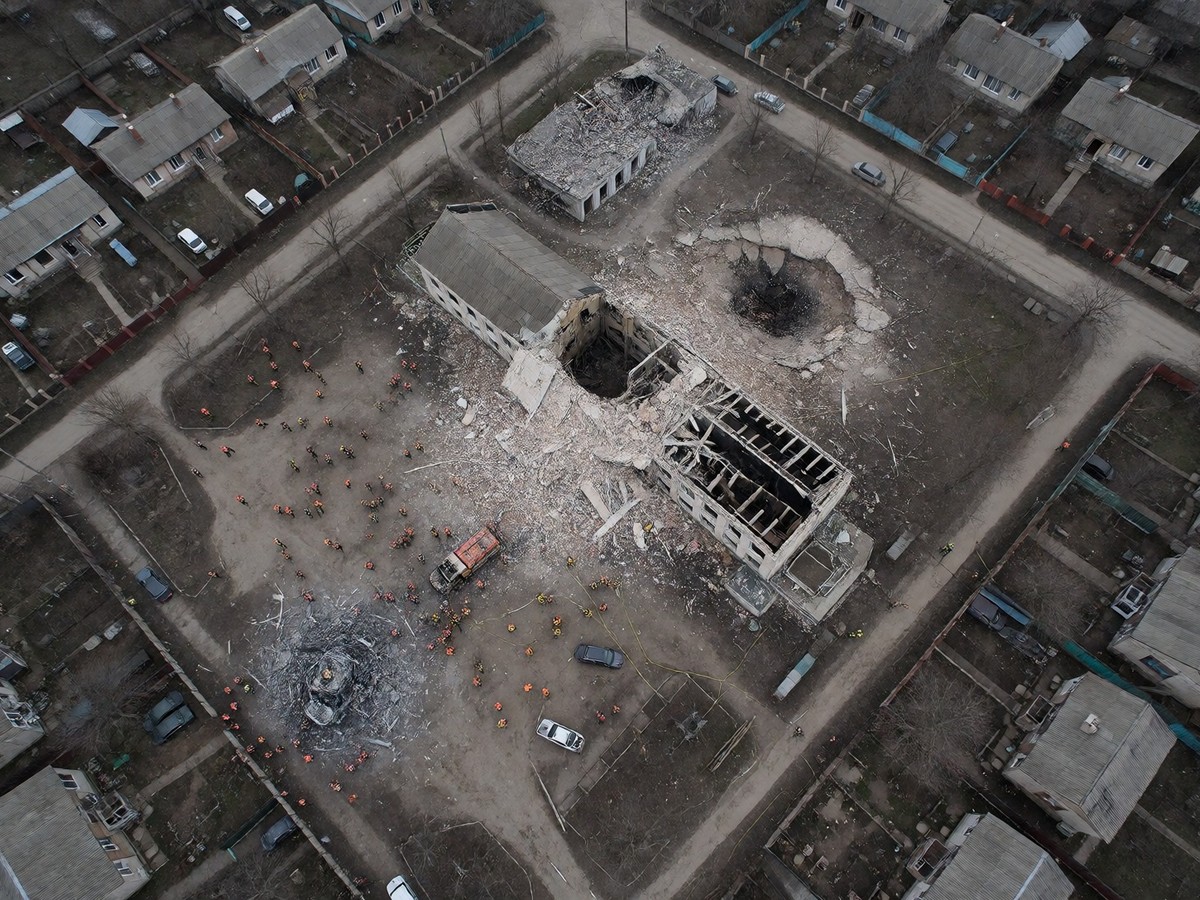
The Russian strike on Komyshuvakha killed 24 people, including two rescuers and four police officers, after at least nine 3,000kg FAB-3000 aerial bombs hit a local school used for humanitarian needs. I find the sequencing of this attack particularly brutal: a first strike hit the school, and a second strike hit the shelter where people were hiding. Mykhailo Semikin, the Zaporizhzhia regional head, said that 27 people were initially reported missing and that rescue teams had to stop work multiple times because of Russian drone attacks. Before the death toll reached 24, Regia Harchenko, the secretary of the Zaporizhzhia City Council, reported that 27 people were missing when only 18 deaths were known. Five people also sustained injuries, including two rescuers. The strike destroyed a sports hall and a utility building, damaged the school building, and destroyed a fire-rescue vehicle. President Volodymyr Zelensky posted a video showing a huge crater left after the attack and rescuers searching through the rubble. He noted that the local residents received humanitarian aid there every week, and he said this attack shows Russia wants more killings rather than peace following the recent evacuation from Oleshky. The Russian military has not publicly commented on the matter.
A failed emergency alert system
The security of Ukraine’s emergency alert system failed on Sunday night when unknown hackers sent false messages to residents in Kyiv about impending nuclear strikes and chemical attacks. I see this as a dangerous manipulation of public fear, especially since the app even warned of street-to-street fighting and radiation threats. Nina, a resident, said she lay on her bed and wondered what was coming when she felt terrified. The messages included English text with spelling mistakes, as well as Ukrainian text and a Russian message claiming that Ukraine was about to be hit by Oreshnik missiles, which can carry nuclear warheads. Sofia Kochmar, a 34-year-old mother in Lviv, felt nervous when she saw the word "nuclear" before realizing the notification mentioned impossible street fighting in Kyiv. Anastasiia Romanytska, a 29-year-old ballerina living in Kyiv, said her body reacted as if she were under stress. Yevhen Baliutov, a cybersecurity expert at the Kyiv School of Economics, said the hacking was clearly Russian. This incident illustrates the weakness of the system. It took the Ukrainian Air Force 15 minutes to say the app was compromised, but it took over an hour to issue "all clear" messages to the public.
Fighting in the Kherson region
Russian military activity in the Kherson region resumed after the six-day ceasefire, which Melania Trump reportedly helped broker, expired at 11pm on Sunday. I find the Russian use of this pause to rotate troops and move heavy equipment into Oleshky to be a direct violation of the spirit of the truce. A Russian drone hit a hospital in Kherson at 7.40am, leaving rooms wrecked and windows blown out, although officials said nobody was hurt. Dmitry Pulinets, the commander of Ukraine’s 34th Separate Marine Brigade, told Sky News that Russian soldiers were previously unable to drive in Oleshky, neither during the day, nor at night, nor in bad weather. Now they have this opportunity, and for the last few days this movement has been happening constantly, he told Sky News. While Dmytro Lubinets, the Ukrainian ombudsman, hoped to bring back more of the thousands who left, Vladimir Putin’s spokesperson Dmitry Peskov stated there were no immediate plans for another truce. Lubinets, who visited Oleshky to coordinate the mission, worked with Melania Trump’s aide Marc Beckman. Melania Trump said in a post that more than 750 people had left the area. The occupied city of Oleshky sits 3 miles from Kherson on the opposite bank of the Dnipro River. Separately, in the Vinnytsia region, a drone strike next to an education facility killed a 13-year-old girl and a woman, while several other children sustained wounds.