New stability for like-minded nations
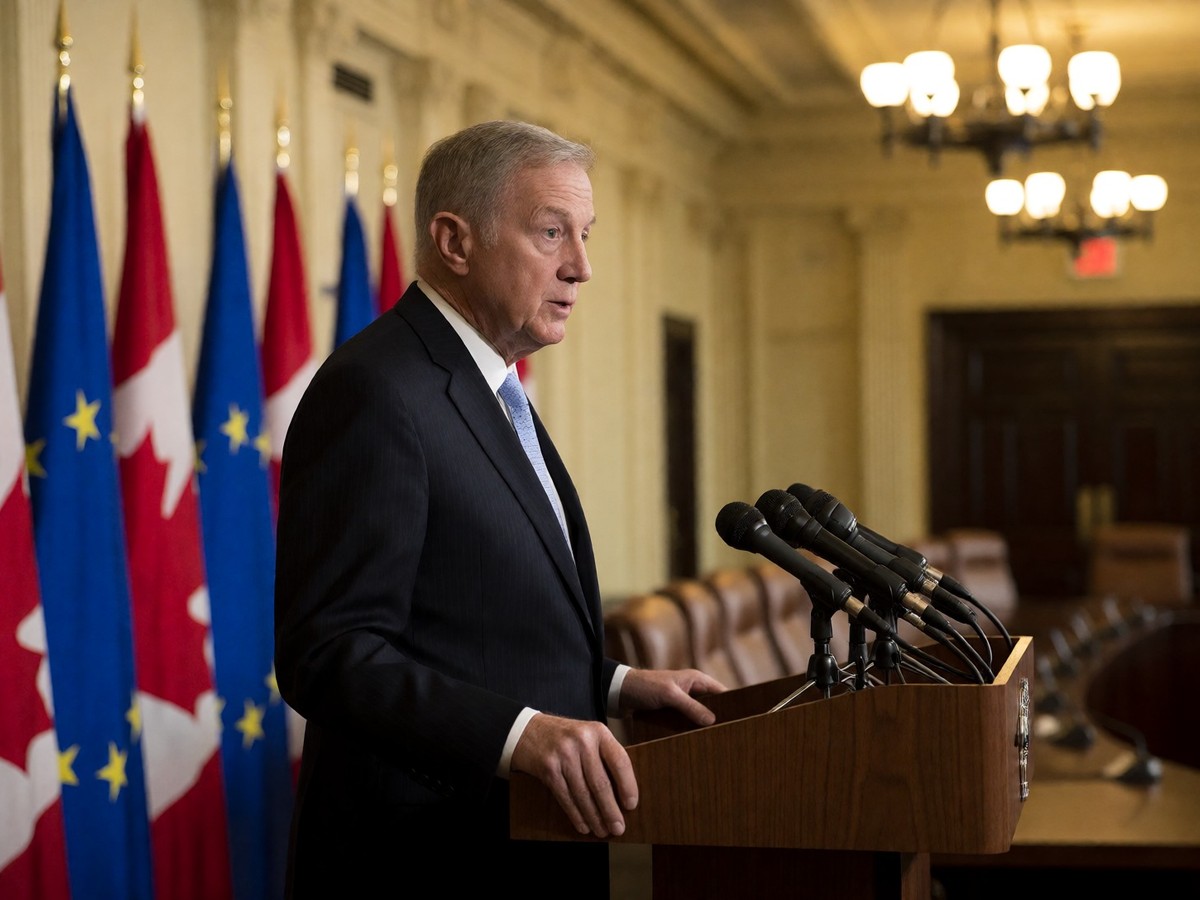
Canada and the European Commission announced the Alliance for the Future in Montreal on Friday to provide a protective canopy for citizens and a hedge against geopolitics. Prime Minister Mark Carney and President Ursula von der Leyen concluded a two-day summit by agreeing to a €90bn support loan for Ukraine. The leaders discussed an integrated market worth tens of billions of dollars through reduced trade and travel restrictions. Carney addressed the need to lessen reliance on American defense technology after Elon Musk, a dual Canadian citizen, throttled Starlink and Starshield speeds over Ukraine in mid-October to disrupt Ukrainian military and defense operations. He cited the "erosion of democratic norms" and "the weaponization of trade" as reasons for this deeper partnership.
The two sides announced an agreement to bring Canada into Europe’s supercomputing network to train AI models. The Canadian federal government also announced a C$1.6bn stake in Cohere Inc, which plans a merger with Germany’s Aleph Alpha GmbH. The tie-up will establish dual headquarters in Berlin and Toronto. Carney said the alliance ensures the future of AI does not fall to "those we don’t know, or by whom we don’t trust." European Council president Antonio Costa called Canada "by far the most European of the non-European countries." Costa said the two sides would pursue the "most closer, the most deepest, the most stronger association" ever between the European Union and a non-European country.
Economic security and Quebec tensions
The leaders proposed Canada become an associate member, though they will decide the specific scope of that role at a 2027 summit. Germany and other EU members previously worked to remove the term from a draft statement because they fear it confuses other nations seeking membership. Von der Leyen, who first floated the term, called the designation uncharted territory. Carney and Von der Leyen both referred to "associate membership" at the summit. Carney suggested the alliance could find ways to build certainty around supply chains through "more competition, more choice" to "withstand shocks, together."
| Initiative | Specific Detail |
|---|---|
| Ukraine Support | €90bn loan |
| Cohere Investment | Up to C$1.6bn |
| AI Access | European supercomputing network |
Von der Leyen noted that energy or semiconductor suppliers "are increasingly turned into instruments of pressure" when trade becomes a tool of economic pressure. This tension mirrors domestic friction in Quebec where Premier Paul St-Pierre Plamondon skipped the summit because the federal government refused his request to speak publicly. He claimed the federal government only offered him the chance to serve shrimp cocktails as a substitute for real influence. He described the federal invitation to sit at the head table as an attempt to force Quebec "to get back in line, with the vassalization and invisibilization of Quebec."