Geopolitical shadow play
Trump meets Xi Jinping and Vladimir Putin in Shenzhen this week. This meeting occurs as the German Chancellor gathers the Coalition of the Willing in Berlin tomorrow to coordinate Ukraine support. Trump’s envoys, Jared Kushner and Steve Witkoff, remain silent at the Chancellery. I find the disconnect between Trump’s direct diplomacy with Moscow and Beijing and the European attempt to maintain control over the situation over Ukraine entirely reckless. European officials fear Trump could finalize a deal with Putin that ignores European security interests. Marie-Agnes Strack-Zimmermann, chair of the EU Defense Committee, says it is paradoxically a good sign that China is not discussing Ukraine during this three-way meeting.
Diplomatic skepticism
European diplomats doubt Putin wants peace. During negotiations in Abu Dhabi last week between the U.S., Ukraine, and Russia, officials reported the Russian side refused to concede any territory or positions. The European officials who attended the three-way meeting in Abu Dhabi last week reported that the Russian side was reluctant to give ground and that the entire process may lead nowhere or collapse again. No new date for face-to-face talks exists. Fredrik Wesslau, a senior policy fellow at the European Council on Foreign Relations, says Putin believes he has more to gain from continuing the war than from a ceasefire.
French President Emmanuel Macron said on November 14 that Putin is betting on forcing Ukraine to its knees by increasing strikes against civilians. While Kushner and Witkoff sought Putin’s "blessing" for Europeans to join future talks in Moscow, the Kremlin cast doubt on whether such consent exists. A German diplomat said Putin is only negotiating because he needs a deal with Trump. The U.K., Germany, Italy, and Poland, alongside the European Council and Commission, will represent the region if invited. These officials fear Russia will demand a revision of the security architecture, specifically the reversal of NATO’s expansion. Norway’s Foreign Minister Espen Barth Eide told POLITICO that NATO deployment in NATO countries is not a question to discuss with Russia.
The strike dispute
U.S. Deputy Pentagon Chief Elbridge Colby criticized Ukraine’s long-range strikes against Russia during a meeting in Brussels on Tuesday. He argued these strikes do not blunt Russian advances and instead harden the resolve of the Russian public. He specifically noted that strikes targeting civilian infrastructure, such as the retailer Wildberries, likely increase the Kremlin’s willingness to escalate. German Foreign Minister Boris Pistorius called the Pentagon’s assessment "quite a stupid thing" because he believes the focus should be on Russian terroristic strikes against Ukrainian energy, water, and heating infrastructure. British Defence Secretary Wes Streeting countered that the strikes helped degrade Putin’s war machine.
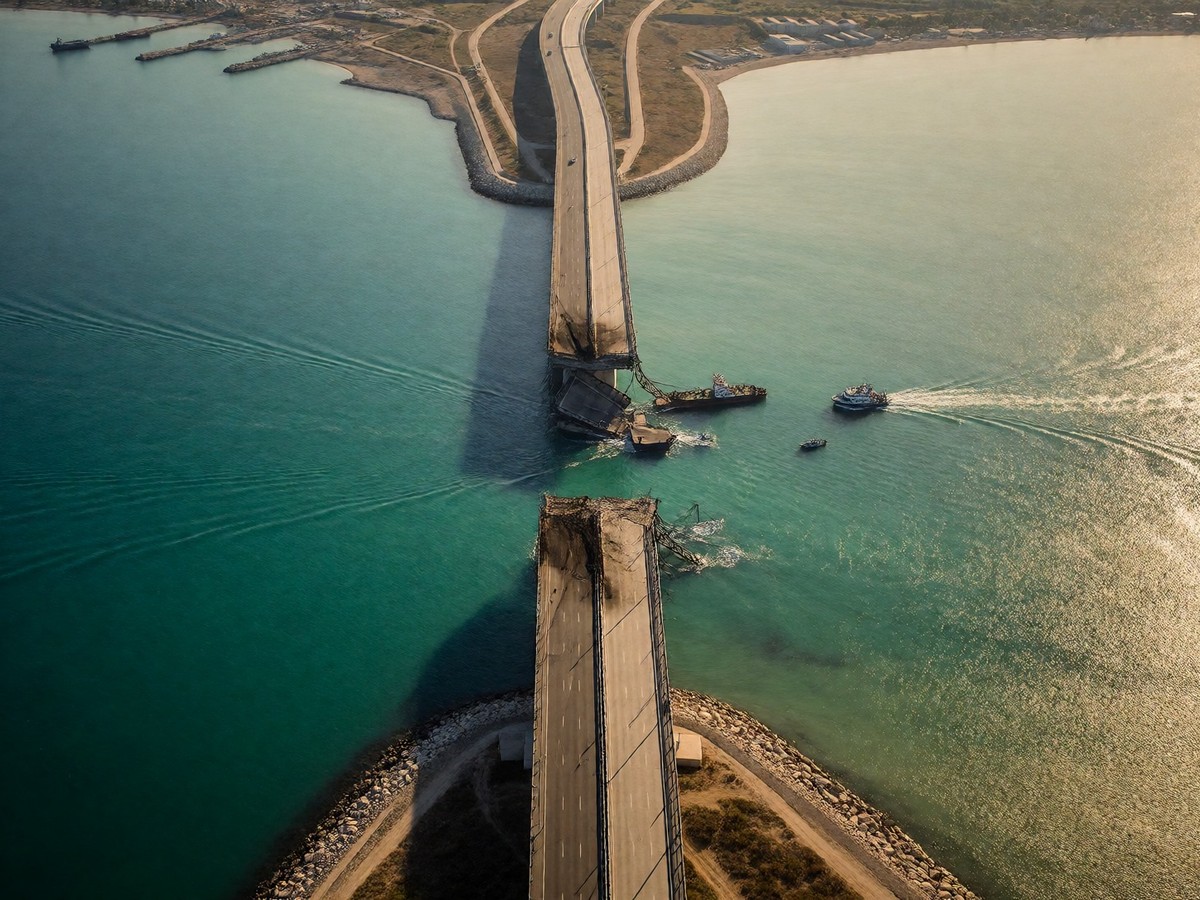
Ukraine recently used Ruta cruise missiles from the Dutch company Destinus to damage the Kerch bridge linking Crimea to Russia. President Volodymyr Zelenskyy described the strike as revenge for Russian attacks on Ukrainian cities and energy networks. Oleksandr Danyliuk, president of Destinus, said seven of its Ruta cruise missiles hit the bridge during an operation that Zelenskyy said took weeks to prepare. This strike happened as Russia intensified attacks on Ukrainian infrastructure, including two major bridges in Kyiv. Ukraine says it has taken out 30% of Russian oil refining capacity. To support Ukraine, Germany, Norway, and Sweden announced over $300 million in fresh contributions to the NATO-backed PURL program. This program was set up last year after the U.S. stopped directly funding Ukraine’s war effort following Trump’s return to power. The U.K. announced £240 million in air defense support, which includes 1,000 short-range missiles and a dozen radars.