The Student List secured a 30-seat working majority in the recent parliamentary elections, ending 14 years of rule by Aleksandar Vucic and the Serbian Progressive party. On Tuesday, 140 candidates were sworn in at the National Assembly. This group of political novices includes former basketball star Dejan Bodiroga, high-school English teacher Katarina Scepanovic, and former National Bank of Serbia governor Dejan Soskic. While the new members began their work, a caretaker government under outgoing prime minister Djuro Macut remains in office until the assembly approves a new cabinet. Jelena, a supporter, said the victory marked the "starting day of the democratic era in Serbia."
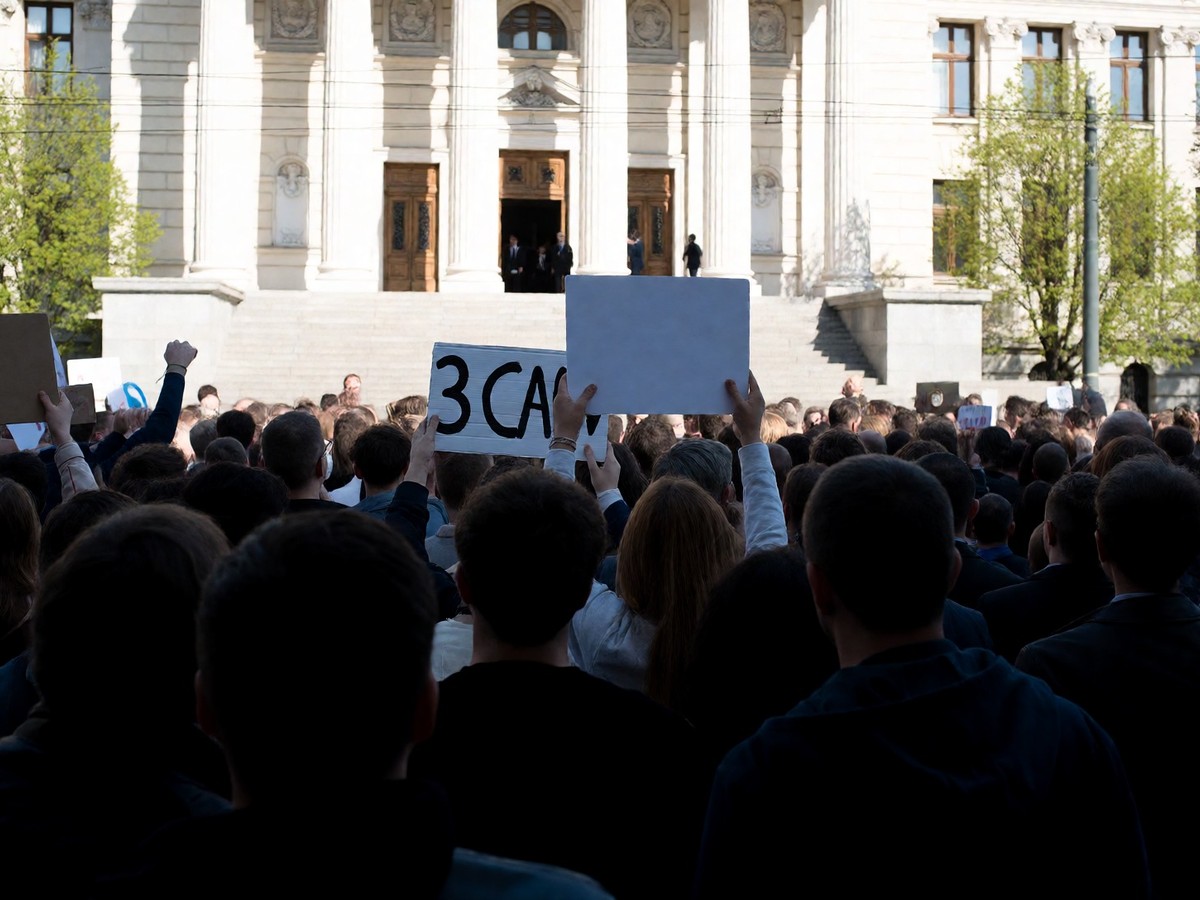
The group includes Bojan Dimitrijevic, a 53-year-old actor. He said he is concerned with culture and ecology but does not know "where to start with fixing every problem we have here." A group from the Belgrade suburb of Zemun, including a woman named Lijlana, joined the crowd to cheer the candidates. Lijlana held a sign that read, "What one person cannot do, 3 can," referring to the Student List’s number on the ballot papers. She added that the people want institutions that operate in favour of people, not in favour of mafia.
Tension and accusations at the National Assembly
The inaugural session faced immediate friction between the new members and the opposition. During the arrivals, a woman in the crowd poured a bottle of drinking yoghurt over the head of SNS candidate Lidija Vukicevic. Vucic responded by saying the students offered Serbia "hatred and yoghurt" and promoted a regime of "naked terror." While the former leader Aleksandar Vucic addressed the assembly for more than 90 minutes, the acting speaker, Stojan Radenovic, called regular extended breaks to manage the prolonged session. Aleksandar, a political science student at Belgrade University, said he wants the new government to "make a better life for us."
They urged supporters to treat all citizens with dignity. One sign at the assembly suggested that former SNS ministers should "end up like Elena and Nicolae Ceausescu," the Romanian leaders executed in 1989. The protests that led to this election followed the deaths of 16 people after a canopy collapse at a renovated railway station in Novi Sad. Students blamed endemic corruption for the deaths and held Vucic and the SNS responsible.
Organizing a new government
The Student List must name a new prime minister and cabinet within 90 days of the assembly’s inaugural session. Sarah El Sarag, a human rights lawyer and MP-elect, said the student movement continues to participate in selecting the cabinet. She noted that candidates held daily meetings to prepare for work. These sessions help professionals, such as cardiologist Ilija Srdanovic, manage their first roles in government. The political shift follows two years of protests triggered by deaths in Novi Sad. Rasa Nedeljkov, the programme director of the Serbian election and democracy monitor CRTA, said the assembly might face "a lot of sabotage, a lot of obstruction, a lot of circus-creating atmosphere."
Meanwhile, Vucic has accused the Student List of using submissive prosecutors and police to carry out unlawful detentions. Prosecutors recently targeted owners of a construction company at the former Hotel Jugoslavija site and the owner of Alta Bank, which processed payments for the state-owned electricity company. Other charges involve senior police officers accused of abuse of office and people suspected of vote rigging and violence during the elections. The movement also includes experts such as high-school English teacher Katarina Scepanovic and former governor Dejan Soskic.