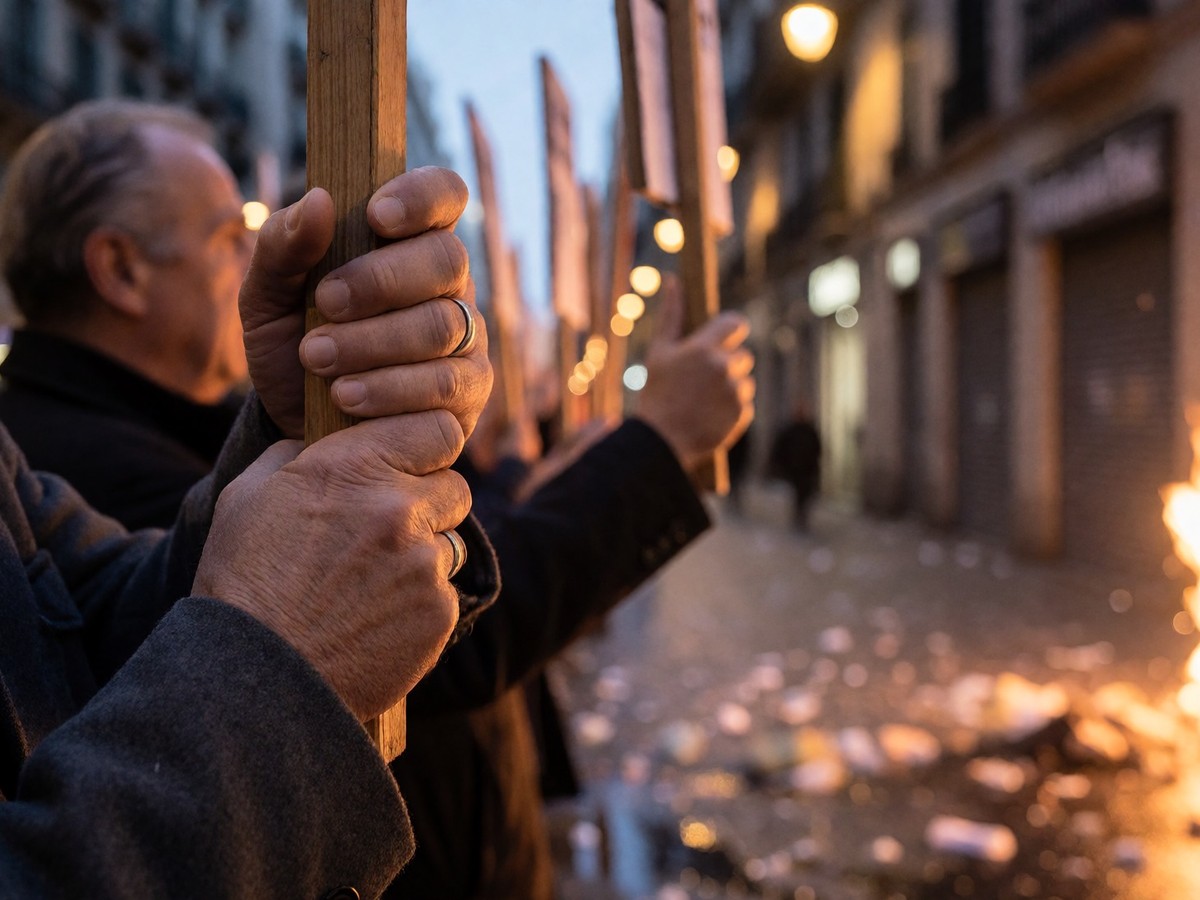
Tens of thousands joined Spain’s first general strike in 14 years, with approximately 120,000 demonstrators marching in Madrid and over 50,000 gathering in Barcelona. The action, called by major unions UGT and CC OO over housing costs and living expenses, triggered serious disruption to transport and public services across the country. While union leaders described the turnout as "massive" and "very significant," the peaceful core of the protest was overshadowed by violent incidents in the Catalan capital. Police in Barcelona deployed riot shields and helmets on Wednesday evening, facing masked men who set fire to rubbish bins and smashed shop windows near the iconic Placa de Catalunya. Local media reported that looters targeted stores including a Lego outlet, while protesters attempted to enter an Apple Store, prompting officers to fire tear gas.
Street violence and political fallout
The interior ministry confirmed dozens of arrests for various incidents, and Spanish reports indicated that estate agencies suffered attacks on their offices. Footage captured small fires burning in the middle of streets, with one witness describing the scene in Las Ramblas as "very intense." Despite the chaos, many participants viewed the event as a success. A woman attending the protests noted it was mostly "joyful," pointing out the presence of children and elderly people. However, the violence contrasts sharply with the political context, as Socialist Prime Minister Pedro Sanchez had actually encouraged workers to down tools following his call for snap elections last month. Sanchez argued that questioning workers’ rights to strike is "nonsense," while conservative leader Alberto Nunez Feijoo dismissed the general strike as "nonsense" and labeled the unions "mafia." The People’s Party accused the government of weaponizing the strike for electoral gain ahead of the November 29 vote.
Economic indicators and housing crisis
Power usage in Spain fell by 7.5% during the early hours of Wednesday, according to data from operator Red Electrica. This figure pales in comparison to the previous general strike 14 years ago, when equivalent consumption dropped by more than 15%, suggesting a lower level of industrial participation this time. The strike was triggered by widespread discontent over affordable housing, specifically after the eviction of 87-year-old Maricarmen Abascal from her Madrid flat, where she lived for seven decades before dying in hospital weeks later. Rental prices in the capital have risen sharply, with the monthly cost of a 50 sq m apartment averaging €1,170 in October. This amount represents nearly half of the average gross monthly salary of €2,460, well above the 30% affordability threshold recommended by housing experts. Gonzalo Alvarez, a volunteer for a housing union, described the situation as "absolutely crazy" given the costs of food, electricity, and water. He stated that buying a house is "completely impossible" with current salaries, echoing the sentiments of other protesters who cited unsustainable living costs. Miguel Garrido, vice-president of the CEOE business association, criticized the strike as having "political ones" rather than labor-related reasons, linking it closely to the early calling of elections.