Ten police officers, including a Deputy Superintendent of Police named Haider Zaman, died when militants ambushed a security team returning from an anti-gold mining operation in Darbukch, Kohat district. The attack occurred on Wednesday as the unit traveled back after completing its mission against illegal extractors along the Indus River. At least eighteen militants were killed during the firefight, according to Interior Minister Mohsin Naqvi, who stated that police "bravely fought" the attackers. The Tehreek-e-Taliban Pakistan claimed responsibility for the ambush in a formal statement released shortly after the incident.
Tactical Details and Casualties
Kohat Hospital Medical Superintendent Dr. Tahir confirmed that ten bodies and ten injured personnel arrived at his facility immediately following the clash. Two of the wounded required urgent transfer to Peshawar due to severe injuries, while the remaining eight received treatment locally. Rescue 1122 spokesperson Jawad Afridi noted that the remote location delayed rescue operations significantly because the area lacks paved roads and is difficult to access. It takes two to two and a half hours to reach the village from Kohat city, which complicated the extraction of casualties and equipment.
Police spokesperson Noman Zeab reported that five police vehicles were set on fire by the attackers during the sustained exchange of gunfire. He described the militants as acting on the "instructions of criminal elements," suggesting a coordinated link between armed groups and local miners. A senior officer revealed that thirteen other personnel returned safely from the operation despite the heavy resistance encountered on the return route. The Khyber Pakhtunkhwa Police stated that the incident exposed a "collusion" between extremist networks and criminal syndicates operating in the region. Governor Faisal Karim Kundi ordered a full investigation into the failure of security protocols and vowed that the perpetrators would face legal consequences.
Context of Illegal Mining
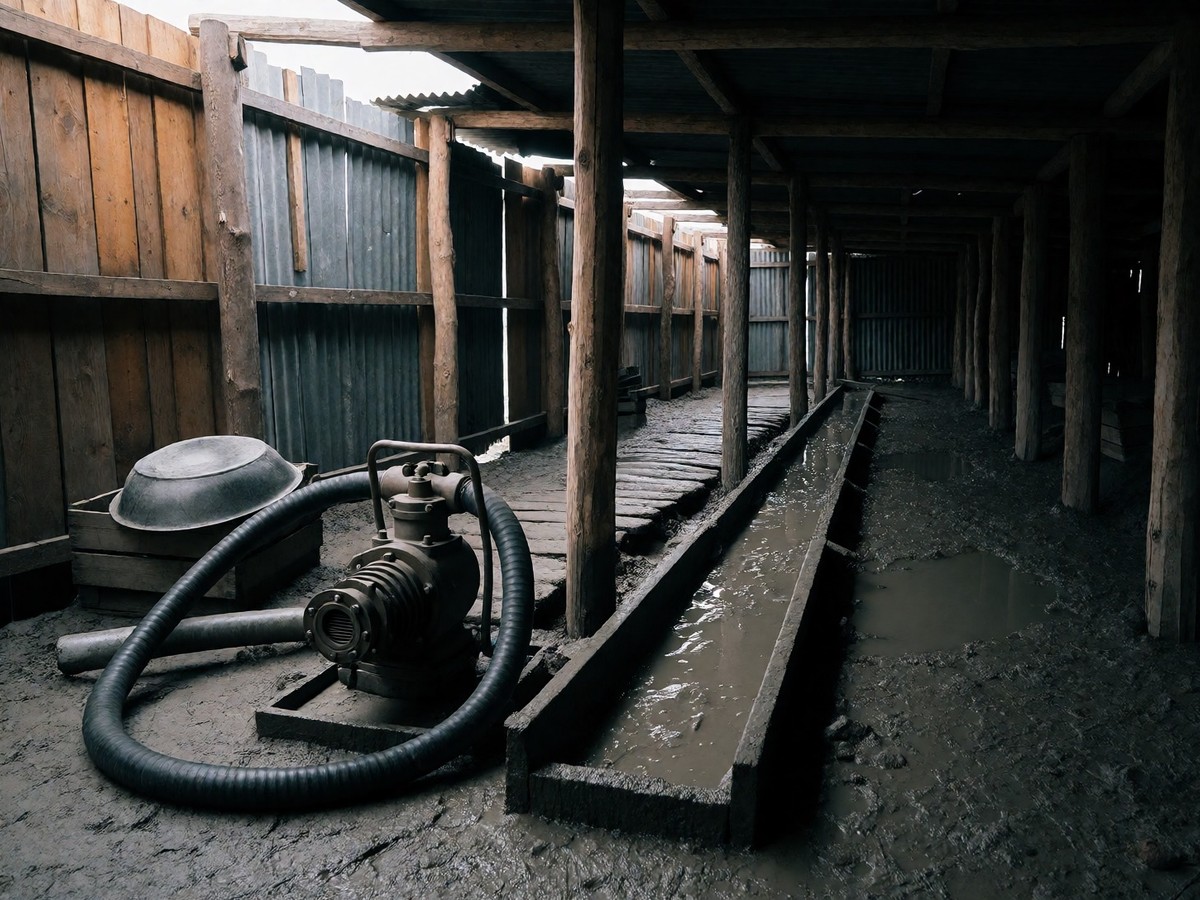
The Darbukch area sits between Khushalgarh and Shakerdara, forming a long strip along the river where locals have mined gold for generations. Traditional methods involve washing sand in pans to separate heavy gold particles from lighter soil, a process that causes minimal environmental damage. However, modern operations now use excavators and industrial pumps to process large volumes of material quickly, increasing yields from one gram to five or six grams per session. This shift has led to increased pollution and riverbank erosion, prompting the provincial government to ban unlicensed mining under Section 144 in Swabi, Nowshera, and Kohat districts.
Dr. Faridullah, head of the environment department at COMSATS University, explains that gold enters the river system naturally from mountain deposits. Rainwater and glacial melt carry these fine particles downstream, where they settle in the riverbed sediment. Over the past two years, authorities have registered more than 100 cases of illegal gold prospecting across the province. The central government imposed governor’s rule in Khyber Pakhtunkhwa on October 11, citing the provincial administration’s alleged distance from counter-terrorism efforts. This political vacuum has coincided with a rise in militant activity and intensified security operations in tribal areas, creating a volatile backdrop for such enforcement actions.