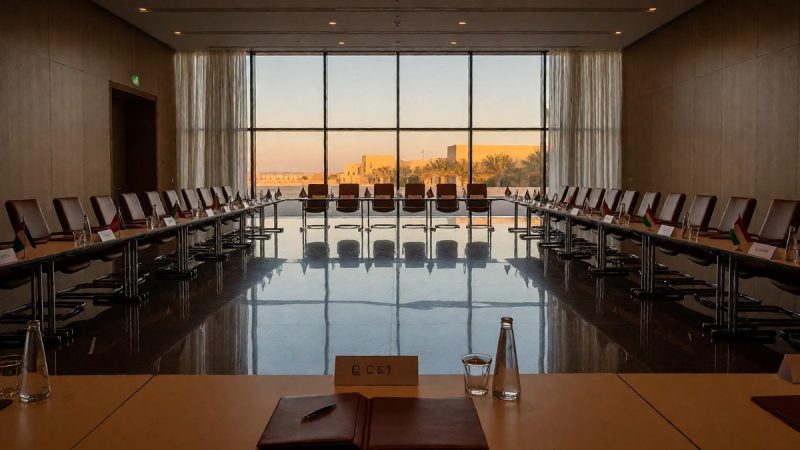
Approximately 50 international leaders will convene at the Convention Centre Dublin on Thursday for a meeting of the European Political Community, an informal forum established in 2022 following Russia’s full-scale invasion of Ukraine. The Republic of Ireland, which holds the rotating EU presidency until the end of the year, is hosting these events under the theme "Europe – strong, secure, and connected." Taoiseach Micheal Martin will greet guests before the plenary session begins, with attendees expected to include Ukrainian President Volodymyr Zelensky and Canadian Prime Minister Mark Carney. Security forces have deployed their largest operation in state history to manage parts of Dublin city centre that are currently closed off due to widespread traffic disruption. Recent bomb threats against schools and media organisations were confirmed as hoaxes, a pattern following similar disruptions to flights across Europe last week.
Negotiations and security guarantees
US envoys Jared Kushner and Steve Witkoff plan to meet Zelensky in Dublin this week, a step distinct from the formal EU meetings but critical for advancing peace talks. This follows two days of US-brokered negotiations in Abu Dhabi where officials described the atmosphere as shifting from "constructive" to "neutral" as discussions on disputed territory proved difficult. Kushner stated that there is "no trust right now between the sides," yet he aims to secure Putin’s approval for a prisoner exchange and, more importantly, for European participation in future rounds. He argued that having Europeans at the table is the only way to achieve progress on broader security issues. Zelensky insists that territorial matters can only be resolved at the leader level and wants a single European representative appointed by the end of the month. However, German officials involved in the Abu Dhabi talks view the process as a "Russian trap" designed to create a false impression of willingness for peace, noting that Europe is merely trying to survive the current diplomatic landscape.
Artificial intelligence and hybrid threats
Friday’s informal European Council meeting will focus on artificial intelligence and Ukraine, marking the first such discussion among EU leaders. Prof Geoffrey Hinton, often called the "godfather of AI," is among the speakers scheduled to address the gathering. The agenda also includes hybrid warfare, defined as non-military methods like cyberattacks and misinformation used to destabilise adversaries. Leaders will discuss economic security and democratic resilience alongside the ongoing conflict. A Friends of Ukraine group, co-hosted by the UK and Ukraine, will hold a separate session where Zelensky is expected to brief leaders directly. While Turkey is absent because it hosts the COP31 climate summit, other no-shows are anticipated. The US side believes that discussing postwar security frameworks, potentially involving NATO-like collective defense agreements, must happen in parallel with the Ukraine peace process. Kushner emphasized that implementation of any postwar security arrangement will not occur until there is an agreement on territory and all other bilateral issues. Europe remains wary of signing up to wider reforms before peace is achieved, fearing that premature commitments could undermine its leverage in the final settlement.